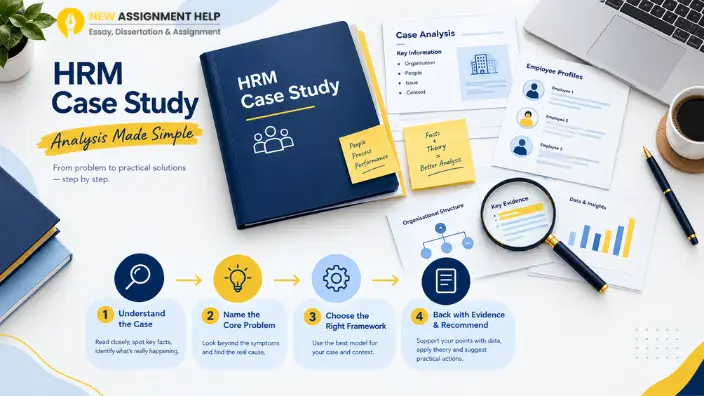
An HRM case study can feel messy at first. You get a long story about a company, some staff and a problem nobody names. Then your tutor asks you to analyse it. Where do you start? To give you a foolproof pattern to do so, here is the guide we’ve curated for Australian HRM students like you. In this, you’ll learn a simple process that can be used on any HRM case. Each step builds on the last, so you can move from reading to writing with a clear plan.
Understand the Case Thoroughly
Before anything, you must read your HRM case study atleast twice. Confused? Here is the reason. Your first read should only be for the story, to get a feel for who the people are and what is going on.
Then read the case one more time, and this time, sit with a pen. Mark facts, quotes, numbers and dates. Note how staff talk about their managers or any specific policies, pay details or rules mentioned about the case. These small details often point to the real issue. Check your assignment question as well. It tells you what the marker wants. Some questions ask for a diagnosis while others ask for a full action plan. Once you know that, you can start hunting for the core problem next.
Name the Core Problem
Most HRM cases show symptoms like high turnover, low morale and constant conflict first. Know that these are just the signs of a deeper issue, so your job is to dig underneath them. Ask simple questions: Why are people leaving? Who is unhappy, and since when? What changed in the business?
For this, you can try the "five whys" method. Keep asking why until you reach a cause the company can act on. For example, staff may quit because of stress. The stress may come from unclear roles. Unclear roles may come from a rushed restructure. Now you have a root cause to write about in one or two sentences. If you can't, read the case again. Next, you need a way to organise your thinking.
Choose a Framework That Fits
Frameworks give your analysis a shape and markers like to see them used with care. Here are some common options and when each one suits.
- PESTEL: covers outside forces like law, economy and technology. Use it when the case mentions market or legal change.
- SWOT: lists strengths, weaknesses, opportunities and threats. It works for a quick overview of the organisation.
- McKinsey 7S: checks strategy, structure, systems, values, skills, style and staff. It suits restructuring and culture problems.
- Employee lifecycle: follows staff from hiring to exit. If your case is about retention or onboarding, go for this one.
- Harvard or Michigan model: links HR practices to business results that suit strategic HRM topics.
You don't need all of them. One or two well-chosen models beat five shallow ones. Match the model to your problem, then fill it with real details from the case. A framework only works when facts sit inside it, so evidence comes next.
Back Every Point with Evidence
Strong analysis is the one where each claim is linked to proof. The best way to do this is:
Start with the case → quote a manager → cite a figure or policy → add theory from relevant sources
Try adding Australian context to show that you understand local setting. Let’s say your case is about unfair dismissal, awards and workplace rights, refer to the Fair Work Act 2009.
Always remember, numbers make points sharper. Turnover rate, retention rate, absenteeism and cost per hire are common ones. If the case gives raw data, do the sums. If it doesn't, say what data you would collect. This way you’ll be showing careful thinking. Another thing to stay consistent about is your referencing. Most Australian universities use APA 7th, Harvard or AGLC, but it is always better to check your specific unit guide. With your evidence in place, you can now move on to solutions.
Write Practical Recommendations
Recommendations are where many students lose marks because they often write vague advices like "improve communication", “raise sales”, etc. So instead of this, aim for actions the organisation could really take. Something that can link to the root cause along with a rough timeline and a cost idea where possible.
Say the case shows unclear roles after a restructure. So now you may suggest updated position descriptions within 60 days. You could add short manager training on performance talks. Then you could track results with a staff survey after six months. Rank your ideas too. Show which action comes first and why. This tells the marker you understand priorities and are ready to work in a real company situation. Once your recommendations are set, you can go through all of it once again and hit submit.
Final Thoughts
A strong HRM case analysis follows a clear structure. Read closely, name the problem, choose a fitting framework, back points with evidence and finish with practical actions. Make sure that before you submit, check that every section links back to your problem statement. Read the draft aloud to catch long sentences. Compare it with the marking rubric one last time. If you feel stuck at any stage, HRM assignment writing support from a subject expert can give you a fresh view on your draft. With practice, each case gets easier to break down and your journey to your dream grades become easier.