1.Executive Summary
Business Overview
Business Name
GreenWheels Pvt Ltd (Subscription service of electric scooters)
Business Structure & Model
The organisation will operate as a private limited company in Australia. Limited liability will be there in the organisational structure of the organisation. Easier investment access is one of the positive aspects of the organisation. The business to consumer (B2C) model will be followed by the company in its operations. By adopting a subscription system, the organisation will provide unlimited electric scooter service for a fixed amount.
Struggling with complex case study analysis? Download free, expert-written case study samples from the Best Assignment Writing Service Australia.
Business Overview
Unique Selling Proposition: GreenWheel is going to provide subscription-based services for electric scooters. Operations of the company will be based in Sydney and Melbourne. Services will be provided by the company through its mobile application. Target audiences of the business will be students, working professionals, youth segment of the society and individuals with high environmental awareness. Through the services of the organisation, focus will be given on promoting environmental sustainability.
Unique Selling Proposition
Subscription plans for fixed prices will be a unique selling proposition of the company. Unlimited usage of services along with 24/7 customer support will be other USPs of this business. Moreover, maintenance free service along with sustainable operations will be the other USPs.
Business Goals & Key marketing objectives
Over the course of the first twelve months of business, the business aims to achieve the following three (3) goals through the marketing activities contained within this document:
GreenWheels will be focused on achieving 2,500 subscribers within the first one year in Sydney and Melbourne.
Within the first one year, focus will be given by the company on achieving 50,000 downloads of its application. Achieving a share of 15% in the Australian market will be another goal of the company in the first year.
The company will aim to generate a revenue of $250,000 from subscription-based services within the first year.
2.Market Research
Additonal Research considerations
Meso Factors
To refine our marketing efforts and identify a suitable market segmentation, we have identified the following two (2) MESO (i.e. Industry-level) influencing factors and the respective impact on the overall demand of our business offering as well as assisting the business to create a value-add proposition:
| MESO Factor | Effect on overall demand | Value-add proposition |
|---|---|---|
|
Overall Industry |
A constant increase has been observed in the micro mobility sector of Australia. For Green mobility, business friendly urban policies have been introduced by the government (Curtis et al. 2025). |
The company will position itself as one of the sustainable transport solutions based on the trends among customers and also on the incentives provided by the Government |
|
Competitors |
Competitors such as Beam and Lime are there which have a strong presence in the market with a pay per ride model (Beam Mobility, 2025). However, these companies are facing negative criticism due to the poor performance of their applications and high costs. |
Unlimited use subscription is the factor which differentiates the business of GreenWheels. Localised service is another factor which differentiates the operations of the company. |
Micro Factors
To identify a suitable target segmentation, we have identified the following MICRO (i.e. business specific) influencing factors and their respective impact on the overall demand of our business offering:
| MICRO Factors | Factors assisting with Target Segmentation |
|---|---|
|
Customer Preferences & Insights |
Affordability, sustainable transport and predictability are the factors which are highly valued by customers. Flexibility is demanded by customers in daily rentals. In order to increase market share, a high emphasis must be given by businesses on identifying diverse preferences of target audiences and customers (Haris, Samosir & Lubis, 2023). |
|
Company Resources & Distribution Capabilities |
Resources of the company at the initial phase will be 30 scooters and the infrastructure of the application. |
|
Brand Positioning |
The company will position itself as a sustainable and affordable transport solution to customers such as youth, working professionals and tourists. In this era, businesses are able to enhance their brand reputation by focusing on environmental and social sustainability (Agu et al. 2024). |
|
Pricing & Value Proposition |
The pricing models of competitors are unpredictable and due to this reason, subscription tiers will be $10 per day, $35 per week and $99 per month. |
3.Market Segmentation
To determine our most suitable market segmentation, we have analysed our market and assessed our customer needs within our chosen market segment. Our research has assisted us with identifying all potential customer groups that could benefit from our product/service. The following segmentation variables illustrate the specific characteristics of our market segmentation.
| Segmentation Type | Identified Market Segment |
|---|---|
|
Demographic |
Working professionals from the age group 18 to 35 years. Students, customers from the middle-income background and international tourists. Analysing affordability of customers is vital for companies to set their marketing and pricing strategies fruitfully (Nagle, Müller & Gruyaert, 2023). |
|
Geographic |
Various areas of Sydney and Melbourne and the company will focus on expanding to Brisbane. |
|
Psychographic |
Customers with high environmental awareness, tech-savvy segments of the society and urban commuters who prefer sustainable and affordable transport options. |
|
Behavioural |
Individuals commuting short distances regularly, individuals not satisfied with the per-minute pricing model and tourists focused on exploring cities. |
4. Target Segmentation
In conducting the market segment and assessing our goals, capabilities and resources, we’ve selected the following two (2) most viable segments to focus our marketing activities on:
| Market Segment | Target Segment Selection Criteria | Why This Segment Works |
|---|---|---|
|
Primary Segment: Working professionals from the youth segment of the society and students (Urban customers from the age group 18 to 35 years) |
Individuals commuting a distance of 3 to 10 km regularly. Customers who highly value affordability, application usage and sustainable transport. |
The company will be able to build strong brand advocacy among the customer segments who are digitally active and looking for sustainable and cost-effective transport solutions. In this modern era, building a strong presence on digital platforms has become essential for-profit earning companies (Gawer & Srnicek, 2021). |
|
Secondary Segment: Tourists |
Tourists who are trying to explore cities through affordable, sustainable and reliable transport solutions. |
Flexibility in daily subscriptions can be effective for attracting this customer segment. Seasonal boost in demand can be fruitful for the business. |
Target Segmentation Summary
The following primary and secondary target segmentation groups have been chosen as the focus of this marketing strategy (include the reasons behind your decision).
|
Primary Segment |
For revenue generation, GreenWheels will be focused on attracting the youth and tech savvy segment of the society, working professionals and students. According to Ali & Anwar (2021), analysing purchasing patterns is crucial for profit earning firms to design their marketing and pricing strategies. |
|
Secondary Segment |
The company will emphasise on attracting tourists looking for sustainable and affordable transport options in cities. |
5. Customer Personas
Using our Primary and Secondary Segments, we have now identified two personas which will be the focus of our marketing strategy.
Our Primary Segment will be represented by the Primary Target Persona, and our Secondary Segment will be represented by the Secondary Target Persona. Details of each are included below:
Primary Target Persona
| Persona Characteristic | Description | Primary Target |
|---|---|---|
|
Persona Name |
A relatable name that represents the segment |
Hazel Brown |
|
Image |
Use an image to represent your primary target visually |
|
|
Demographics |
Age, gender, education, income, occupation |
Hazel Brown is a 24 years old female from Sydney engaged in part time work. She belongs to the middle-income group and she is a graduate. |
|
Psychographics |
Interests, values, personality, and lifestyle |
Sustainability, advanced technologies, digital connections and affordability are the factors valued by Hazel. She loves to explore cities. |
|
Pain Points & Challenges |
Problems they face that your business can solve |
The high cost of public transport is a pain point for this customer. Along with this, unpredictable pricing models of ride share and highly crowded commutes are other pain points of this customer. |
|
Buying Behavior |
How, when, and why they purchase |
Short distances are regularly covered by her. Predictable descriptions are highly preferred by her. Her purchasing decisions are impacted by reviews on various social media platforms. |
|
Marketing Channels |
Platforms where they discover and engage with brands |
Facebook, Instagram and TikTok |
|
Messaging Strategy |
Key brand messages that resonate with them |
Messages regarding sustainability, ease of use and affordability |
|
Social Media Content Ideas |
Post types that engage the persona |
Reels about exploring cities and videos regarding campus ambassador |
|
Loyalty & Retention Strategy |
How to keep them coming back |
Discounts for students and loyalty rewards |
Secondary Target Persona
| Persona Characteristic | Description | Secondary Target |
|---|---|---|
|
Persona Name |
A relatable name that represents the segment |
Cooper Williams |
|
Image |
Use an image to represent your primary target visually |
|
|
Demographics |
Age, gender, education, income, occupation |
Cooper Williams is a 30 years old male from London and he is from the middle-income segment of the society. He is a visitor in this county and currently staying in Melbourne. |
|
Psychographics |
Interests, values, personality, and lifestyle |
Cooper is one of the adventure seekers and he has a high environmental awareness. Affordable transport is highly valued by him. |
|
Pain Points & Challenges |
Problems they face that your business can solve |
Expensive transport options are avoided by him and he has confusion regarding the public transport system of Australia. He has a limited time for visiting tourist destinations of the country. |
|
Buying Behavior |
How, when, and why they purchase |
He is impacted by the recommendations given by hotels or Airbnb. Online reviews are checked by him before taking purchase decisions. |
|
Marketing Channels |
Platforms where they discover and engage with brands |
Travel applications and travel groups on social media platforms |
|
Messaging Strategy |
Key brand messages that resonate with them |
Unlimited rides for a limited amount and sample prices for rides. |
|
Social Media Content Ideas |
Post types that engage the persona |
Travel vlogs by social media influencers and photo contents among tourists |
|
Loyalty & Retention Strategy |
How to keep them coming back |
Collaboration with hotels, packages for tourists and discounts through booking platforms |
6. Customer Journey & Touchpoints
Buyer Decision Making Process
Below are the five stages of the buyer decision making process and an analysis of how each stage of the process applies to their decision-making journey when considering our business
| Stage | What happens? | How will my primary target feel? | What will my primary target think? | How will my business respond? |
|---|---|---|---|---|
|
Recognition of problem |
Affordable and reliable transport options are needed by commuters |
High frustration of customers due to costly transport options |
Cheap and simple transport options are required |
Promotions on social media platforms regarding the cheaper rates and sustainable transport options of the business |
|
Searching data |
Online options are researched |
Curious feelings |
Which is the most affordable and sustainable transport service? |
Search engine optimization, Application store optimization, collaboration with student groups |
|
Evaluating alternatives |
Services of GreenWheels are compared with that of Lime and Beam |
Confused and interested |
Why is GreenWheels to be selected over its competitors? |
Clear messaging, unlimited rides, constant customer support and predictable costs |
|
Purchasing decision making |
Application is downloaded and subscriptions are done |
Confident |
Best value can be provided by the company |
Discounts for the customers using the service for first time |
|
Post purchase period |
Evaluation of services and regular usage of scooters |
Happy and satisfied |
The services provided by GreenWheel has made commuting easier and comfortable |
Rewards on loyalty and proactive customer support services |
Customer Journey & Touchpoints
Below are the five stages of the customer journey and an analysis of how each stage of the process applies to the actions they will take during their customer journey when considering our business. The table below also includes the touchpoint that could be used to reach my primary target.
| Stage | What happens? | How will my primary target act and or behave? | Touchpoint |
|---|---|---|---|
|
Recognition of problem |
Issues are identified by customers |
Customers are influenced by the usage of scooters by peers |
Promotions on social media platforms, promotional campaigns by social media influencers, organisation of promotional events on campuses |
|
Searching information |
Customers search information on online platforms |
Scooter rental options are searched by customers on online platforms |
Google Ads, application store and official websites |
|
Evaluation |
Services are evaluated by customers |
Reviews given by users and pricing are compared by customers |
Comparison advertisements and marketing contents created by social media influencers |
|
Purchase |
Purchasing decisions are taken by customers |
Signing up through the application |
Onboarding through the application, providing promo codes and referral links |
|
Post purchase |
Services are evaluated by customers |
Daily riding, posting reviews on social media platforms |
Notifications need to be provided to customers and loyalty referrals need to be provided |
7. Marketing Strategy
Marketing Mix (4Ps)
To ensure a successful strategy and focus on our primary target, the following marketing mix will apply to the primary target to ensure we reach and serve them effectively.
Product/Service
|
Objective: |
Rental of e-scooters through application on the basis of subscription |
|
Key Product Features: |
Unlimited rides with safety kits and 24/7 customer support |
Price
|
Objective: |
Competitive and fixed pricing of the services |
|
Pricing Strategy: |
Subscription tiers will be $10 per day, $35 per week and $99 per month. Discounts will be there for students. Referral incentives will be given to customers. For continuous subscription, loyal rewards will be provided by the company to customers. In determining prices of product and services, a high emphasis should be given by companies on analysing the pricing strategies adopted by their competitors (Darmawan & Grenier, 2021). |
Place
|
Objective: |
Operations of the company will be based in Sydney and Melbourne. |
|
Location & Distribution Strategy: |
E scooters will be available for customers at the zones with high traffic such as Universities, stations and tourist spots. A user-friendly mobile application will be introduced by the company for customers. |
Promotion
|
Objective: |
To maximise revenue through increasing subscriptions |
|
Offline (Traditional Marketing Methods): |
Partnerships and collaborations with hotels will be one of the offline marketing strategies of the company. Offline promotions will be done by the organisation through referral cards. Promotional events will be organised at university campuses. |
|
Online (Digital Marketing Methods): |
Marketing promotions will be carried out by the company on social media platforms such as Facebook, Instagram, YouTube and TikTok. As depicted by Khanom (2023), in this modern era, marketing on social media platforms allows firms to reach a wider audience at a less effort. Along with this, the organisation will collaborate with popular social media influencers for carrying out marketing campaigns on various social media platforms. Adopting this marketing strategy, the company will be able to build trust among its target audiences in an easier way. Moreover, focus will be given by the company on carrying out email marketing. |
Marketing Mix in Action
To demonstrate how our marketing mix (4P’s) will effectively reach our Primary Target, please find below a sample of an Offline and two Online marketing messages and a summary of their intention:
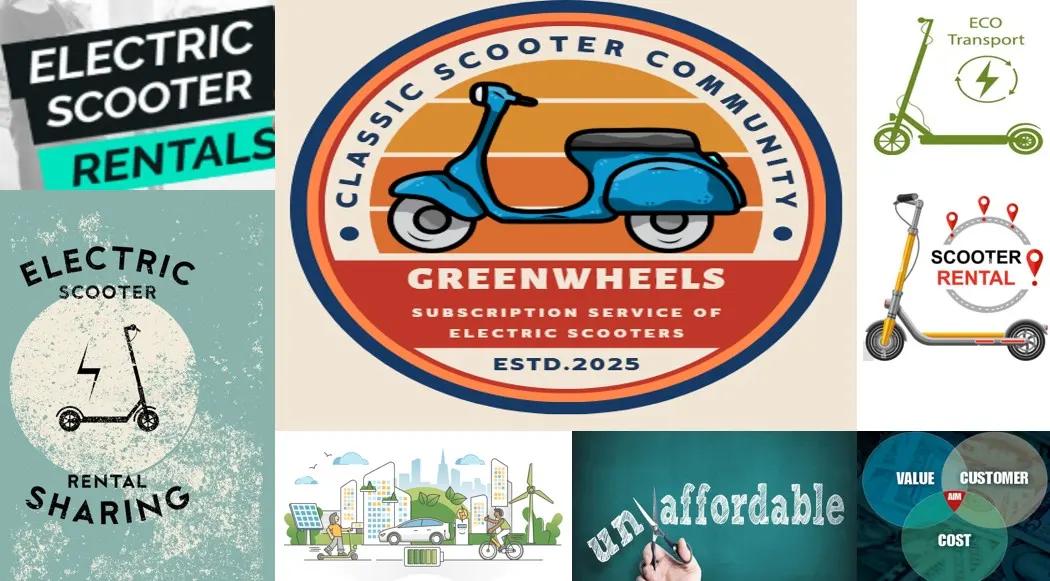
Offline Promotional Intention
The intention of the offline promotional programme of the organisation will be to educate target audiences regarding the key features of the services provided by the company. Boosting downloads of the mobile application will be another intention of the offline marketing campaigns of the company. Focus will be given by the company on conveying the advantages of using the services provided by GreenWheels.
Students analyzing administrative policies, public sector management, and organizational frameworks in Australian welfare systems can explore Management Assignment Help for strategic academic guidance.
Offline Marketing Sample:
Online Promotional Intention
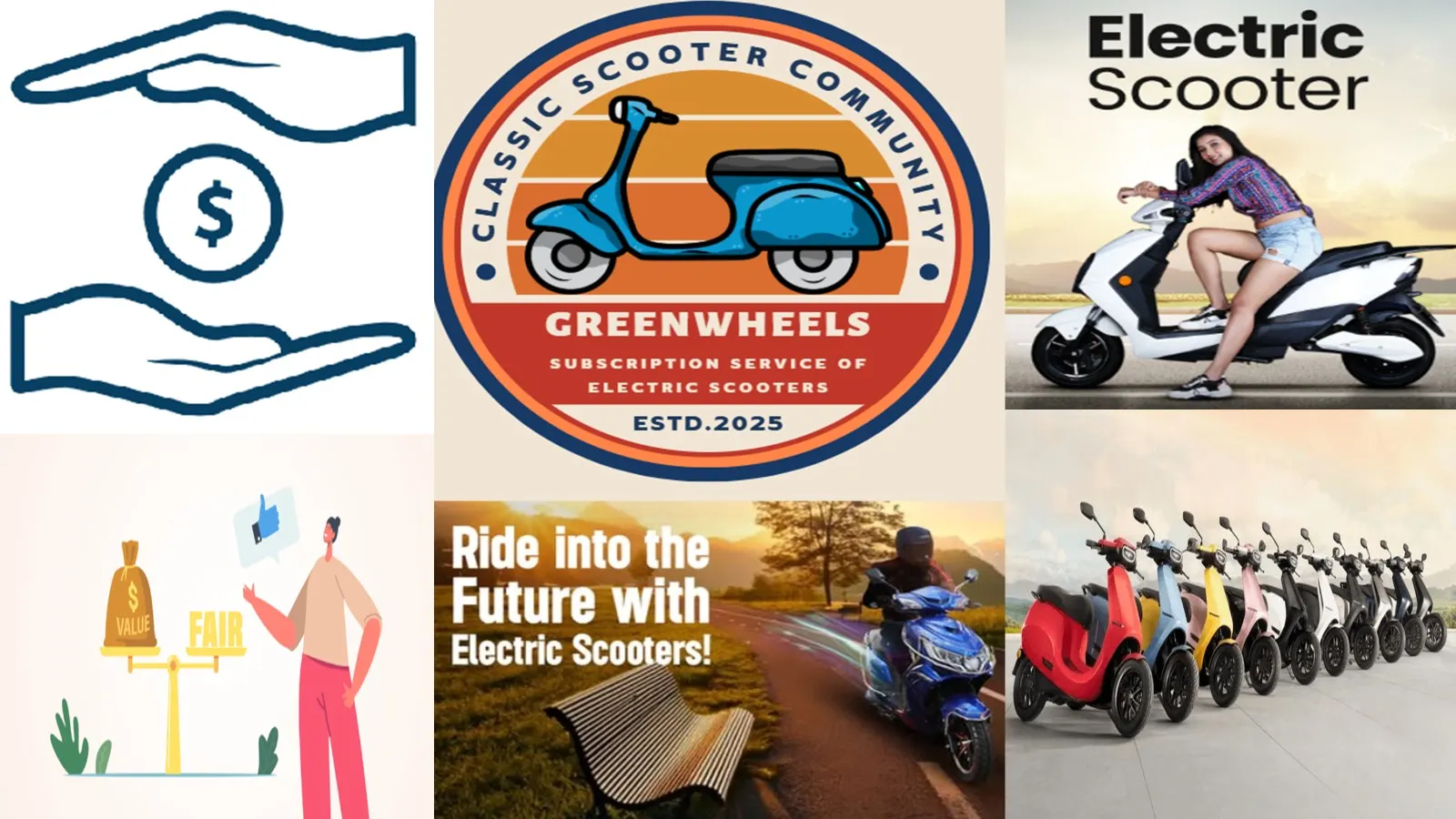
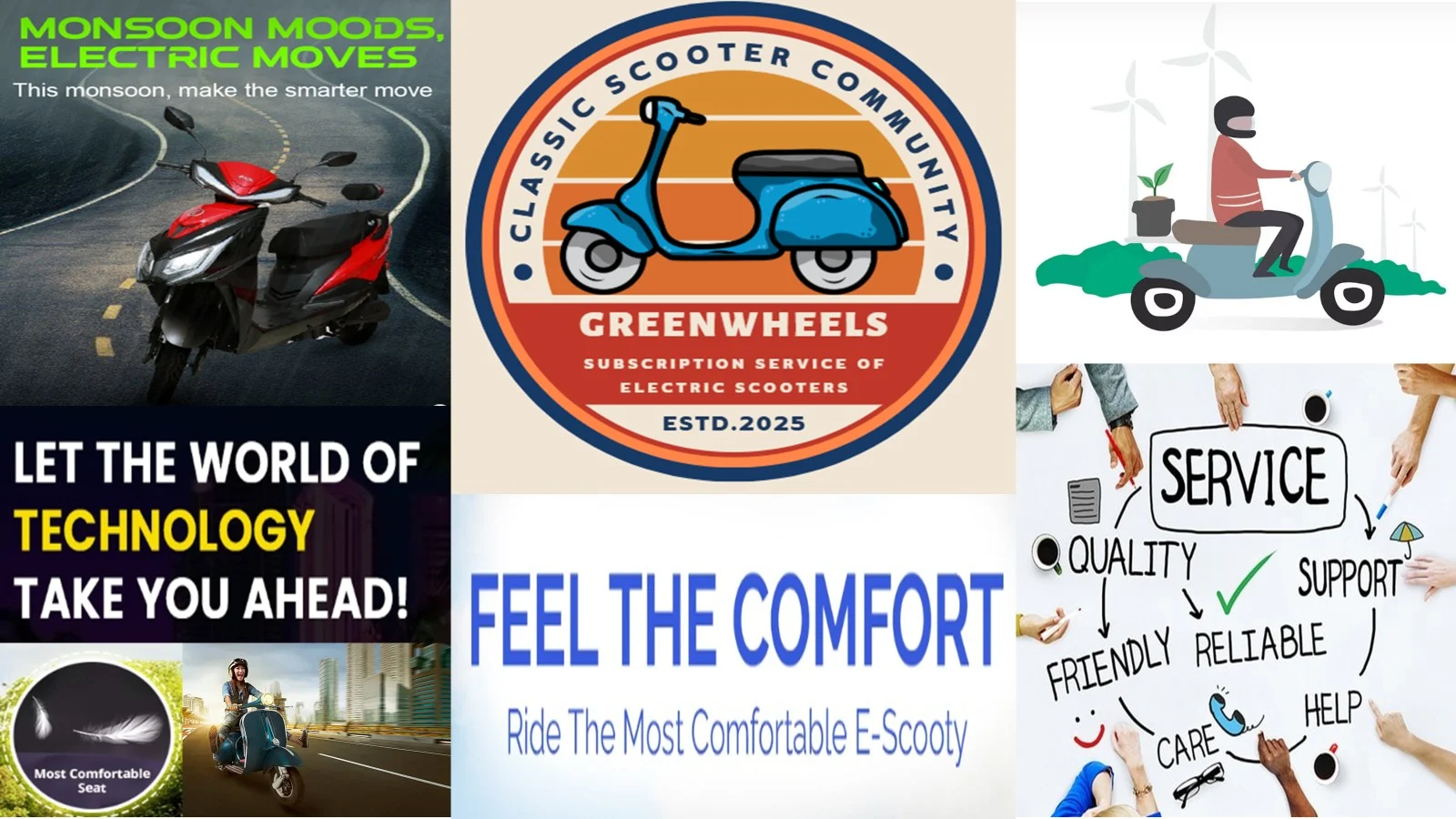
In the online marketing campaigns, one of the intentions will be to enhance brand visibility of the organisation. Engaging social media users with the services of the company will be another intention of the online marketing campaigns. Analysing the choices and preferences of customers through observing online reviews given by them will be another intention of carrying out marketing campaigns on online platforms.
Online Marketing Sample 1:
Online Marketing Sample 2:
8.Marketing Budget
Marketing Budget Allocation
Our budget is divided into the following key areas:
| Marketing Category | Purpose | Total Projected Costs ($) | Estimated Allocation (%) |
|---|---|---|---|
|
Advertisements on social media platforms such as Facebook, Instagram and TikTok |
Focus will be given on social media marketing to build high brand awareness and increase application download by individuals |
$12,000 |
40% |
|
Collaborations with social media influencers |
The company will collaborate with social media influencers to convey its brand messages among target audience at a less effort. Building trust among customers will be another purpose for this |
$6,000 |
20% |
|
Offline marketing campaigns |
To educate target audiences such as students and local residents about the services provided by the organisation |
$3,000 |
10% |
|
Search Engine Optimization (SEO) and Google Ads |
Focus will be given on SEO and Google Ad for increasing brand visibility of the organisation |
$4,500 |
15% |
|
Partnerships of the company with hotels and Universities |
To carry out marketing campaigns collaboratively in an impactful way |
$3,000 |
10% |
|
Email marketing |
Through email marketing, the company will emphasise on enhancing customer retention rate and enhance loyalty among customers |
$1,500 |
5% |
|
Total |
$30,000 |
100% |
Rationale for Budget Distribution
A significant amount of the total marketing budget has been allocated for social media marketing as the majority of the youth segment spends a long time on various social media platforms. According to Tsaltskan, Baez & Firestein (2023), one of the key advantages of social media marketing is cost effectiveness. Along with this, 20% of the total marketing budget has been allocated for collaborating with social media influencers to attract local residents along with tourists in an easier way. For offline making, 10% of the total marketing budget has been allocated to ensure presence of the brand in physical spaces such as University campuses. As per the view of Tadikonda et al. (2024), in order to enhance website traffic of companies, Search Engine Optimization (SEO) plays an important role in this era. In this marketing budget, 15% has been allocated for SEO to improve search results of the company. 10% of the marketing budget has been allocated for partnering with hotels and Universities for enhancing trust among students and local residents.
References
- Agu, E. E., Iyelolu, T. V., Idemudia, C., & Ijomah, T. I. (2024). Exploring the relationship between sustainable business practices and increased brand loyalty. International Journal of Management & Entrepreneurship Research, 6(8), 2463-2475. Retrieved On: 10th August, 2025. From: https://www.researchgate.net/profile/Tochukwu-Ijomah-2/publication/383847817_Exploring_the_relationship_between_sustainable_business_practices_and_increased_brand_loyalty/links/66dc447d2390e50b2c7212e7/Exploring-the-relationship-between-sustainable-business-practices-and-increased-brand-loyalty.pdf
- Ali, B. J., & Anwar, G. (2021). Marketing Strategy: Pricing strategies and its influence on consumer purchasing decision. Ali, BJ, & Anwar, G.(2021). Marketing Strategy: Pricing strategies and its influence on consumer purchasing decision. International journal of Rural Development, Environment and Health Research, 5(2), 26-39. Retrieved On: 10th August, 2025. From: https://papers.ssrn.com/sol3/Delivery.cfm?abstractid=3837579
- Beam Mobility, (2025). Hello. We are Beam. Retrieved On: 10th August, 2025. From: https://www.ridebeam.com/
- Curtis, C., Ma, X., Reardon, L., Legacy, C., & Stone, J. (2025). Micro-mobility: A Policy Vacuum in Australia. Urban Policy and Research, 1-18. Retrieved On: 10th August, 2025. From: https://www.tandfonline.com/doi/pdf/10.1080/08111146.2025.2505898
- Darmawan, D., & Grenier, E. (2021). Competitive advantage and service marketing mix. Journal of Social Science Studies (JOS3), 1(2), 75-80. Retrieved On: 10th August, 2025. From: https://ejournal.metromedia.education/index.php/jos3/article/download/9/15
- Gawer, A., & Srnicek, N. (2021). Online platforms: Economic and societal effects. Retrieved On: 10th August, 2025. From: https://kclpure.kcl.ac.uk/portal/files/149143202/EPRS_STU_2021_656336_EN.pdf
- Haris, A., Samosir, H. E., & Lubis, S. H. (2023). Marketing communications as strategy expanding market share in era 4.0. International Journal of Social Science and Business, 7(1), 188-198. Retrieved On: 10th August, 2025. From: https://ejournal.undiksha.ac.id/index.php/IJSSB/article/download/53535/25951
- Khanom, M. T. (2023). Using social media marketing in the digital era: A necessity or a choice. International Journal of Research in Business and Social Science, 12(3), 88-98. Retrieved On: 10th August, 2025. From: https://search.proquest.com/openview/6c40926c0b4c7f399961c176ac065799/1?pq-origsite=gscholar&cbl=2032017
- Nagle, T. T., Müller, G., & Gruyaert, E. (2023). The strategy and tactics of pricing: A guide to growing more profitably. Routledge. Retrieved On: 10th August, 2025. From: https://www.taylorfrancis.com/books/mono/10.4324/9781003179566/strategy-tactics-pricing-thomas-nagle-georg-m%C3%BCller-evert-gruyaert
- Tatikonda, R., Ponnala, J., Thatikonda, R., Yendluri, D. K., Kempanna, M., & Ananthan, B. (2024, March). Optimizing digital marketing strategies Through search engine optimization. In 2024 IEEE international conference on contemporary computing and communications (InC4) (Vol. 1, pp. 1-6). IEEE. Retrieved On: 10th August, 2025. From: https://ieeexplore.ieee.org/abstract/document/10649088/
- Tsaltskan, V., Baez, R. S., & Firestein, G. S. (2023). Cost-effectiveness of social media advertising as a recruitment tool: A systematic review and meta-analysis. Journal of Clinical and Translational Science, 7(1), e180. Retrieved On: 10th August, 2025. From: https://www.cambridge.org/core/services/aop-cambridge-core/content/view/3E5FEAD078AACFC473EE0A5BE6169842/S2059866123005964a.pdf/div-class-title-cost-effectiveness-of-social-media-advertising-as-a-recruitment-tool-a-systematic-review-and-meta-analysis-div.pdf