Your lecturer posts a 3,000-word report that needs to be submitted within nine weeks. The due date seems far away, so you push it aside. Life fills up with classes, work shifts and a few late nights out. Then week nine rolls in, and the report is still a blank page. Most students at Australian universities have faced this at least once. The good news is that you can avoid it by creating a project management plan for your assignment. It will break your big task into small steps and will give each step a date so that you always know what to do next. Also, the deadline will stop feeling like a surprise. Creating this plan takes just about an hour, but the payoff lasts all semester. Let’s start building now.
What Is a Project Management Plan for an Assignment?
In business, a project management plan sets out goals, tasks, timelines, resources and risks. When you start planning, your assignment becomes your project. You become the project manager who tackles the plan as a short document that shows what you will do, when you will do it, and what you need. Group projects gain even more from this, because every person on the project gets a definitive role and duties. Now that you know what the plan covers, the first step is to understand the brief.
Step 1: Read the Brief and Set Your Goal
Start with the task sheet on Moodle, Canvas or Blackboard. Read the marking rubric twice to note the word count, referencing style, due date and weighting. Then write one sentence that states your goal. For example: “Submit a 3,000-word report on supply chain risk by 5 pm Friday, week 10.” This sentence keeps later decisions simple and easy to follow. With the goal set, you can split the work into pieces next.
Step 2: Break the Assignment Into Tasks
A long task feels easier when you cut it down. Aim for steps that take one study session or less at a time. The list below shows a typical breakdown for a report writing task.
- Unpack the question and highlight key terms
- Find five to eight scholarly sources
- Write a rough outline
- Draft the introduction and body sections
- Write the conclusion and reference list
- Edit, proofread and check formatting
When you split your work like this, each section becomes small enough to be finished in one sitting. Ticking them off as you move forward builds momentum. Once the sections are ready, set deadlines.
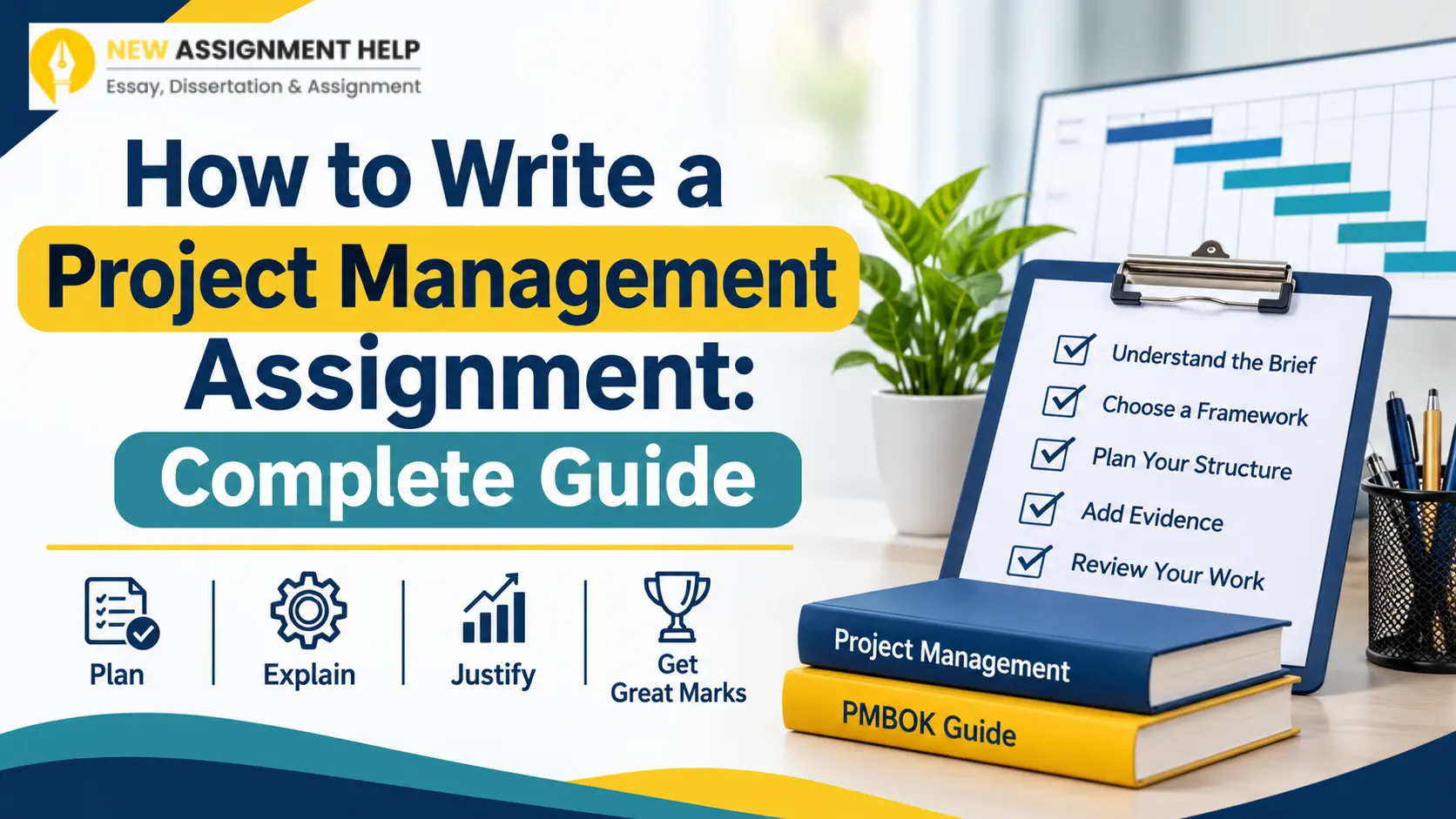
After organising your tasks, learn how to write a project management assignment with a clear structure, relevant research and effective academic writing techniques.
Step 3: Build a Timeline
At this stage, you need to work backwards from the due date. Always keep a buffer of two or three days for any last-minute surprises. Keep your other subjects, work shifts and family plans in mind to be realistic. The table below shows a three-week plan for a 2,000-word report.
| Week | Task | Time needed |
|---|---|---|
| Week 1 | Read the brief, research, and collect sources | 6 hours |
| Week 2 | Outline and draft all sections | 8 hours |
| Week 3 | Edit, proofread, check references, submit | 4 hours |
This table is just for reference. Change the hours to suit your word count and your pace. A 3,000-word essay needs more research time than a short reflective one. After your timeline looks realistic, you can list what you need to get the work done.
Step 4: List Your Resources
Resources are anything you need to finish the work. Think about library databases, textbooks, software and a quiet study space. Check that you can access each one early and easily. Some journal articles sit behind a login, get to them while you have time. Your uni library may also run referencing workshops and writing consults. Group members count as resources too. Give each person a clear role, such as researcher, editor or slide designer, to avoid confusion later. Even a strong plan can hit trouble, so the next step is to look at risks.
Step 5: Plan for Risks
Never assume that you won’t run into any trouble. Know that every project has risks and a few common ones include a sick day, a laptop crash or a source you cannot find. Write down three likely risks and add one quick fix for each beforehand. For example, save your work to cloud storage every day. Book a library visit early in case books are on loan. If a real emergency hits, check your uni’s extension and special consideration policy and apply before the due date. A plan with backups feels calmer to follow and is less likely to give you stress. After that, you need a simple way to keep it all on track.
Step 6: Track Progress and Adjust
Any plan only works if you keep checking it. Spend five minutes each week reviewing your task list, marking what you’ve achieved so far, what slipped and what is yet to be done. Free tools like Trello, Notion or a basic spreadsheet all work well for tracking progress. Even a paper planner works too. If you fall behind, cut the next task into smaller parts and keep going. Small changes keep you moving without the panic of a last-minute rush.
Final Thoughts
A good project management plan for your assignment takes about an hour to build but can save you many stressful nights. All you have to do is start with the brief, break it into tasks, set dates and plan for risks. Then check in weekly. If a tricky topic slows you down, project management writing support is one option to explore alongside your tutor. Whichever route you take, build your plan today and let your future self thank you.

 8 Years | MBA (Marketing & HR)
.webp)
.webp)