Question 1
Q.1.a. Explanation to Dimitra of the aim of the partnership arrangement, and coverage area
A partnership agreement is a written agreement that denotes the terms within which the partners run the business. The main objective of it is to ensure protection and reduce the conflicts by stipulating the rights, responsibilities, and liabilities of each of the partners. In Australia, partnerships are regulated by laws which include the “Partnership Act 1892 (NSW)” and the similar acts in other states but these only provide default provisions (Legislation.nsw.gov.au, 2025). Written agreement is thus useful because it enables the partners to customize arrangements to meet their business and individual demands with the effect of making expectations clearly expressed.
Struggling to hit top grades? Explore free, top-quality coursework samples from the Best Assignment Writing Service Australia.
On the case of Dimitra, the agreement must stipulate her 25 per cent ownership and state how the profits and losses are allocating. Capital contributions should also be documented in the agreement, implemented rules on further funding and emphasize that partners are jointly and severally liable to debts which puts their own personal assets on the line. On the whole, the contract has a structure that ensures the safety of the business, as well as more or less equal interest of both partners.
Q.1.b. Diagnosis of the problem with the signing of a partnership agreement that Dimitra should determine before signing another agreement with her brothers
Maximizing risks is the best thing that Dimitra must pay attention to before signing the document. To begin with, she should know exposure to liability. In the situation, the partners bear personal liability over partnership debts according to the law of Australia (affirmed in "Canny Gabriel Castle Jackson Advertising Pty Ltd v Volume Sales (Finance) Pty Ltd (1974) 131 CLR 321))”. Her own funds will be on the line in case of suing or default of the business in terms of paying creditors (Birchgrovelegal.com.au, 2025).
Second, she has to analyze control by the management. Although she will be in charge of operations, the contract should provide her with the same opinion on the strategic decisions. Assuming that her brothers still uphold control majority they might not allow her to bring value in critical issues.
Third, the tax impact should be addressed. Partnerships are not taxed as individuals; the partners distributions of income and charged at their personal marginal tax rates. Dimitra needs to consult tax to confirm that she is fully aware of the effect on her personal finances.
Fourth, it is a family partnership: conflicts may soon be on the personal level. Intense methods of settling disputes have to be incorporated in the agreement to ensure the safety of the family and the business.
Lastly, Dimitra needs to obtain external counsel to review the contract before signing, to make sure that the conditions do not harm her interests and represent her planned role.
Question 2
Elaboration on the meaning of concepts of an “offer” and “acceptance” regarding valid contract
An offer in the “contract law” refers to a proposal under this condition that is clear and definite by one party towards the entering into an agreement. It must have a desire part that it wants to get obligated by the law provided that it gets accepted. Acceptance is the unqualified receptive of those terms of the other party (Kaczorowska, 2025). Combination of an “offer and acceptance “create mutual assent that is the foundation of essential binding contract. Under the law of Australia, the “offer and acceptance” should occur and a consideration given at the expense of which the contract is in escrow. Without them, the Constellation also cannot be a legal contract, but a non-binding one.
Provide two transfer plans to provide examples of explanation
The thoughts of “offering and acceptance” are prevalent in the region of the financial planning when formalization of relationships between the clients and service providers is required.
Discussion of the “financial planning example 1”
A “statement of advice (SOA)” is the professional suggestion of a financial advisor to a client in the form of an investment to a managed fund. The SOA specifies the specifications like the product of investment and cost in which their investment took place and is an invitation to transact under such terms (Asic.gov.au/, 2025). It implies that some sort of acceptance takes place when the client sign the SOA and requests the adviser to implement the recommendation. The relationship is settled by an advisor as a contractual one which involves a legal obligation at that point between the advisor and the client.
Discussion of the “financial planning of example 2”
In another scenario, the applicant completes a form covering in an insurance policy. An “offer” is also present in such implementation to the insurer. Following the review and approval of the application and transmission of the policy document by the insurer, the insurance contract took legal force including through acceptance.
Question 3
Four elements or principles that Elena must be capable of proving “negligence, or these are the elements”
To succeed with a negligence case, Elena would need to show that she had 4 cases; the “duty of care”, “breach of duty”, “causation and damages”. These principles are common in the “Australian tort law”, in each case of which there are the case of “Donoghue v Stevenson[1932] AC 562” that was the foundation of the principle of duty of care and the case of “Wyong Shire Council v Shirt (1980) 146 CLR 40”, which restricted the scope of the corroborating case.
The principle of the "Duty of Care”
Neil had a “duty of care” to recommend Elena in the manner his best interests and risk profile (nor otherwise) would have been recommended were he to have been acting under the “Corporations Act 2001 (Cth)” and the “ASIC standards” as a licensed financial advisor, not in his own interests. This is reflected due to the advisor- client relationship that Elena possesses and her inexperience in investments (Casejudgments.com, 2025).
The principle of the “Breach of Duty”
When the adviser acts in an irresponsible manner, breach occurs. Neil marketed outdated information and made Elena believe the fund had been in practical risk despite the extensive exposure to high risk shares. This action was not likely to be at the standard of a good adviser as, in the case of “Rogers v Whitaker (1992), 175 CLR 479”, it was mentioned that there was need to feed the consumer with the correct and updated information.
The principle of Causation
Elena will need to prove that she had lost the breach by Neil. The way Neil influenced her was that when he promised her that the fund was safe. It is most likely that she would not have taken an estimated risk provided to her the existence of the new risks.
The principle of “Damage (Loss)”
Finally, even Elena suffered losses as the prices of the resources had lost their value due to its risky assets. This serves the damage test which stage, since the loss onto her was as a direct result of Neil giving negligent advice.
The scenario facts that will work in favor of the tort negligence claim to be the case with Neil
The facts also prove the fact that Neil failed to update his knowledge base as he ignored Elena in terms of risk-aversion and made empty promises.

Question 4
Outline of considerations of Julie and Bob which may be applied within the terms of property ownership
Regarding the acquisition of the property between Bob and Julie, they ought to agree on the type of tenancy they should use which one is the joint tenancy or the tenancy in common.
Joint tenancy indicates the fact that they both evenly own the property on top of the fact that on the other side of the rule that was referred to as survivorship, the restrict is transmitted at another in the occurrence of the death of either of them (Foster,, 2025). The decision would not protect the will of Julie who desired her offering to go back to her kids.
In tenancy in common the property is divided into some portions. A larger amount which is represented as contribution of Julie following her divorce settlement would be signed. In her death the share would be distribution to her children but according to her will. This follows the provisions of the “Australian property law” under the How the Laws Law in conjunction with the Real Property Act 1900 (NSW) and supported by the principles of de facto contributions of the family law.
Therefore, tenancy in common can be identified as the best type of tenancy that will ensure the continuity of the investment of Julie to protect her children.
Question 5
Illustrate to Roger based on his understanding of misleading descriptive behaviour in respect of utilization of the material availed by investments of CC
Consideration against Roger in relation to, misleading or deceptive conduct
Roger must be careful of promotional materials provided by the CC investments. Act of misleading or deceiving conduct contains the provision of incorrect information in which it is legal to legalize such conduct in “section 18 of the Australian Consumer Law” (Schedule 2, “Competition and Consumer Act 2010 (Cth))” and “s1041H of the Corporation Act 2001 (Cth)”. In High Court in “Parkdale Custom Built Furniture Pty Ltd v Puxu Pty Ltd, (1982)” the argument was reiterated that the standard impression of conduct is significant and not technicalities. Similarly to the “case of ASIC v Westpac Securities Administration Ltd (2019)”, it was established that the liability of the advisers to the clients can accrue at any time when such information is misleading a client without another cause of the error occurring.
In the case of Clyde, an informed investor, the implication of overstated information can be step-leg as well. Consideration of exaggerated statements can therefore be both a “misleading, and unconscionable” practice under “s12CB of the ASIC Act 2001 (Cth)”.
Recommendations for Roger
A statement regarding the performance of the product can or has been recorded on or area under the disclosure on performance of a finished product before being projected to the clients and prior occurring any claim, Roger ought to verify by himself with disclosure statements and source data regarding the product in the market. He will include express disclaimers that the third party information can be amended and he in good faith he will make it clear that each client meeting is recorded to indicate that he has acted in good faith. These measures will enable him to reduce the legal risk, comply with the demands of consumer protection laws, and not to lose the faith of former and the new buyers.
Question 6
Q.6.a. The five most important risks in the operations of the “Green Trees Bank” that are present in its daily operation should be identified and discussed
There are various risks that “GreenTrees Bank” is exposed to on daily basis being a financial intermediary. There is “credit risk” due to lending activities where earnings and capital will be affected in case of default as Bernhardt is proposing to Jason, a mortgage of up to 400,000 dollars (Mitchell, 2024). “Liquidity risk” arises when the bank is faced with the need to roll out depositor withdrawal as it keeps its lending obligations as shown in the transaction and savings accounts of Jason. “Market risk” is based on the change of interest rates, share prices and exchange rates, and a purchase of credit cards abroad would subject the bank to the currency changes (Ramadani, 2024). There exists an “operational risk” as well because of a dependence on 500 employees and safe systems that oversee account management and transactions. And lastly, compliance and regulatory risk, which is maintenance of the stringent requirements of the APRA, ASIC and RBA and noncompliance will lead to financial sanctions and reputation damage.
Q.6.b. The three types of individual regulators and their functions have been identified regarding the above case study
There are three principal regulators of the activities of “GreenTrees Bank”. The bank has adequate capital through the guarantee of the “Australian Prudential Regulation Authority (APRA)”, which is in charge of providing resources to control risks related to depository as well as loaning related products (Schumpeter, 2024). APRA also monitors the superannuation fund of Jason, to see that the fund is running prudently (Abdelaziz et al. 2022). Conduct of financial service providers is controlled by the “Australian Securities and Investments Commission (ASIC)”; the bank must make the correct disclosure and that the advisors do not mislead the clients (Omran et al. 2021). This safeguards both the senior clientele such as Clyde and the weak clientele such as Clementine. “Monetary policy” employed by the “Reserve Bank of Australia (RBA)” has a bearing on the cost at which Jason can borrow money and the payment regime that ensures successful settlement of transactions such as those carried out when he buys goods or services most of which are outside the United States involving the use of his credit card.
Q.6.c. Explanation of the nine examples of the flow of funds between the sectors using the presented case study
Jason puts his salary in the flow under his household sector to the banking sector in his “GreenTrees transaction account”. “GreenTrees” lends these deposits out to loans, like the mortgage that Jason hopes to buy, flow of the banking industry to the household industry. Jason sources the household sector to superannuation sector superannuation flow to the superannuation sector. The Australian shares are invested in the “superannuation fund” as flow between the superannuation sector to the corporate sector (Duho et al. 2023). Dividends are paid on his direct shares flow through the corporate sector to household (Shapiro, 2024). “Export flow” of wine to the foreign sector increases with Jason purchasing wine overseas with his “GreenTrees credit card”. During the transfer of “GreenTrees foreign exchange services” in the banking industry to the foreign sector, overseas vendors are paid in the process. “GreenTrees Bank” creates equity on the “ASX flow” between the “household/corporate” and the banking sectors. GreenTrees offers the “intermediation services” to lend money to corporations implying that lending money through banks to corporates involves flows in bothes directions (Ramsay & Webster, 2022). These examples show that “financial intermediaries” play a crucial central role in the operations of funds that circulate daily among “households, banks, corporates, superannuation fund, and the foreign sector”.
Students evaluating income and asset thresholds, cost-of-living pressures, and supplementary allowances in Australian welfare policy can explore Finance Assignment Help for detailed academic guidance.
Question 7
Q.7.a. Determination of direction of movement of the “demand curve of Fallon Industries” in the next two years in the line of swimwear
“Fashion and textile business” in Australia has a major role in the Australian economy as the industry earns higher export revenues than other businesses such as wine and beer companies.
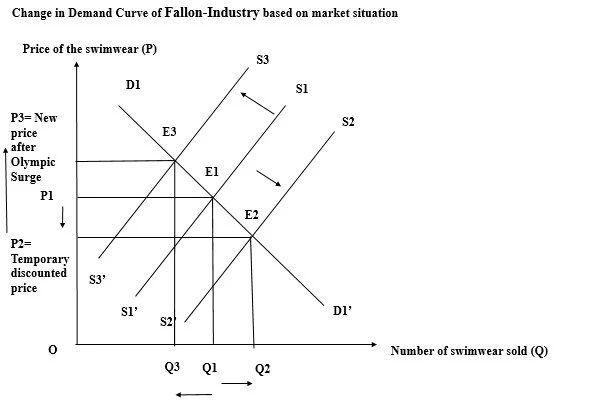
Figure 1: Direction of the “demand curve of the Fallon industry”
According to the combined factors of demographic shifts, investment in the technology avenue of “Fallon Industries swimwear” will shift to the right in the forthcoming two years reflecting that there will be an increment in the demands of the product (Shapiro, 2022). This role of Fallon to place low prices on old stock in September in the short firmly will encourage consumers to purchase properties at reduced costs willingly. This makes it initially fall along the existing demand curve as was drawn in the provided graph “(P1 to P2, Q1 to Q3”).
Since the new outfits are now being published and the Olympics are slowly coming, the consumer will now want to wear the real “Olympics swim wear”. This shifts the “aggregate demand curve (D1 to D1’)” to the right and turns out to be initially high in demand at every price level. Subsequently, there will be a shift of “equilibrium at E1 and E3 in which E3 price (P3)” and quantity sold (Q2) are found (Shambaugh & Strain, 2021). Olympic cycle corresponds to a non-price determinant which can influence the consumer preferences and would lead to high acceleration in the demand within the short term.
Q.7.b. The “labour market, wage inflation and wages policy”, soon to be experienced by the Fallon industries
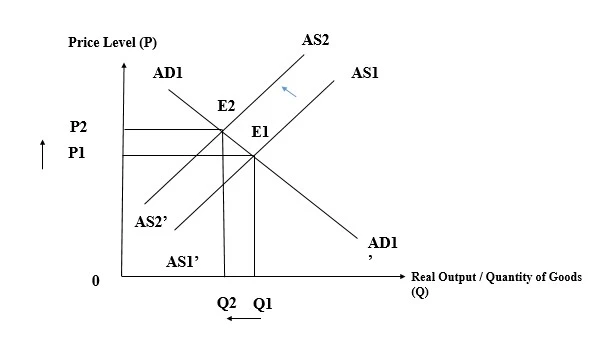
Figure 2: Exposition of the case of the “wage policy, inflation and the general state of the labour market situation”
The problem which is faced by “Fallon industries” is having talented workers and occasionally hiring and maintaining them because the labour markets do not have them and also those available are expensive to hire. This leads to cost-push inflation, in the short run (in the coming six months) in an exhibition area as shown in the figure. The “leftward/aggregating Supplies (AS) curve movement (AS2)” shifting the equilibrium E2 forth as compared to E1. Consequently, the price level will not only rise to P2 but also the real output decline will not only be Q2. It means that it is proposed to be costly to produce and low production volume (Abdul Aziz et al. 2023). The fact that there exists an exclusive Olympic contract also provides Fallon with a monetary tool upon which to negotiate wage demands but in the event of inability to counter the labour shortage the scenarios of production delays do not allow them to meet the rising consumer demand especially in peak of the sales seasons.
Q.7.c. The definition and description in detail using information given
The case study showed that “Fallon industries” appeared to be in the phase of “expansion or recovery in business cycles”. The most important among these are that it has increased consumer demand, in the build up to “Olympic Games and the peak sales” in the summer. The company is undertaking new investments in new production under the future design which can be considered as typical of growth-oriented behavior.
The costs are also being straining and there are labor shortages which are hallmark during the late recovery periods or early peak periods. The “tightening labor market” is experienced during the inflation of wages and the increasing costs of inputs and wage rise in searching workers which is a pointer that the economy is on its peak where there is high demand and capacity restriction and pressures of costs are increasing.
The “business cycle the industry” is experiencing has been addressed.
Fallon Industries is facing the expansion phase of business cycle with the rising demand by the customers ahead of the “Olympic Games” and an increase in sales during the warm seasons. However the crises of “labor shortages, wage rising, and rising-cost of production”, are indicative of the industry being in the “peak phase” as the high demands fail to be serviced in relation to the capacity constraints that threaten to stall the industry in the near future.
Q.7.d. Determining the market structure of the “Fallon business” within the consumers who desire the “eal Olympic Swimwear territory”
Fallon industries is experiencing a “monopoly market structure” where it hosts consumers who desire the real Olympic swimming genre attires. Monopoly is experienced when a single manufacturer predominates with exclusivity in his/her rights. According to the case study, Fallon, in supply of “Swim and Dive uniforms” to the Olympic Swim and Dive team, has monopoly position because he holds an exclusive agreement and no other company is allowed to make the real Olympic-brand swim suits.
The nature of the organization and definition of the same
“Entry barriers” are also one of the primary characteristics of a monopoly business since none is allowed to venture into the business unless licensed by Olympus. “Fallon” possesses enormous pricing power especially when it is the time of the Olympics or the demand is high. Customers do not have the option to provide substitute products that can wear the genuine Olympic swimwear and, therefore, customers are left with no option other than to purchase the products of Fallon, thereby increasing its strong and shielded market positions.
References
Journals
- Abdelaziz, H., Rim, B., & Helmi, H. (2022). The interactional relationships between credit risk, liquidity risk and bank profitability in MENA region. Global Business Review, 23(3), 561-583. [Retrieve from: https://journals.sagepub.com/doi/abs/10.1177/0972150919879304][Retrieve on: 01.09.2025]
- Abdul Aziz, A. Z., Abas Hidayat, A. H., Ellin Herlina, E. H., & Wanti Ernawati, W. E. (2023). Oligopoly market and monopolistic competition in the digital era: Shariah economic perspective. Quality Access to Success, 24(193), 61-67. [Retrieve from: https://repository.syekhnurjati.ac.id/9637/][Retrieve on: 01.09.2025]
- Duho, K. C. T., Duho, D. M., & Forson, J. A. (2023). Impact of income diversification strategy on credit risk and market risk among microfinance institutions. Journal of Economic and Administrative Sciences, 39(2), 523-546. [Retrieve from: https://www.emerald.com/jeas/article/39/2/523/195214][Retrieve on: 01.09.2025]
- Foster, N. J. (2025). Duty of care in negligence in relation to pure economic loss. [Retrieve from: https://papers.ssrn.com/sol3/papers.cfm?abstract_id=5361123][Retrieve on: 01.09.2025]
- Kaczorowska, B. (2025). ARTICULATING CONTRACTUAL GOOD FAITH: THE EVOLVING CIVIL AND COMMON LAW DIMENSION. [Retrieve from: https://studiaiuridica.pl/api/files/view/2918685.pdf][Retrieve on: 01.09.2025]
- Mitchell, W. C. (2024). Business cycles. In Business Cycle Theory, Part II Volume 8 (pp. 225-241). Routledge. [Retrieve from: https://www.taylorfrancis.com/chapters/edit/10.4324/9781003549758-13/business-cycles-wesley-mitchell][Retrieve on: 01.09.2025]
- Omran, M., Ramdhony, D., Mooneeapen, O., & Nursimloo, V. (2021). Integrated reporting and board characteristics: Evidence from top Australian listed companies. Journal of Applied Accounting Research, 22(4), 732-758. [Retrieve from: https://www.emerald.com/insight/content/doi/10.1108/JAAR-04-2020-0077/full/html][Retrieve on: 01.09.2025]
- Ramadani, A. (2024). Influence of Credit Risk, Liquidity Risk, Operational Risk, Market Risk and Solvency Risk on Profitability. Jurnal Riset Akuntansi Dan Bisnis Airlangga, 9(2), 144-162. [Retrieve from: https://e-journal.unair.ac.id/jraba/article/download/61067/31471][Retrieve on: 01.09.2025]
- Ramsay, I., & Webster, M. (2022). Enforcement Action by the Australian Securities and Investments Commission in Relation to Financial Adviser Misconduct. Company and Securities Law Journal, 39(6), 225-251. [Retrieve from: https://papers.ssrn.com/sol3/papers.cfm?abstract_id=4205325][Retrieve on: 01.09.2025]
- Schumpeter, J. A. (2024). The explanation of the business cycle. In Business Cycle Theory, Part II Volume 5 (pp. 259-284). Routledge. [Retrieve from: https://www.taylorfrancis.com/chapters/edit/10.4324/9781003550358-15/explanation-business-cycle-joseph-schumpeter][Retrieve on: 01.09.2025]
- Shambaugh, J. C., & Strain, M. R. (2021). The recovery from the Great Recession: A long, evolving expansion. The ANNALS of the American Academy of Political and Social Science, 695(1), 28-48. [Retrieve from: https://journals.sagepub.com/doi/abs/10.1177/00027162211022305][Retrieve on: 01.09.2025]
- Shapiro, A. H. (2022). Decomposing supply and demand driven inflation. Federal Reserve Bank of San Francisco Working Paper, 18, 44. [Retrieve from: https://www.rba.gov.au/publications/confs/2023/pdf/rba-conference-2023-shapiro.pdf][Retrieve on: 01.09.2025]
- Shapiro, A. H. (2024). Decomposing Supply‐and Demand‐Driven Inflation. Journal of Money, Credit and Banking. [Retrieve from: https://onlinelibrary.wiley.com/doi/abs/10.1111/jmcb.13209][Retrieve on: 01.09.2025]
- “Partnership Act 1892 (NSW)”
- Legislation.nsw.gov.au, (2025) [Retrieve from: https://legislation.nsw.gov.au/view/html/inforce/current/act-1892-012][Retrieve on: 01.09.2025]
- "Canny Gabriel Castle Jackson Advertising Pty Ltd v Volume Sales (Finance) Pty Ltd (1974) 131 CLR 321))”
- Birchgrovelegal.com.au, (2025) [Retrieve from: https://birchgrovelegal.com.au/2024/02/15/partnership-vs-joint-venture/][Retrieve on: 01.09.2025]
- “Statement of advice (SOA)”
- Asic.gov.au/, (2025) [Retrieve from: https://www.asic.gov.au/regulatory-resources/financial-services/giving-financial-product-advice/statement-of-advice/][Retrieve on: 01.09.2025]
- “Wyong Shire Council v Shirt (1980) 146 CLR 40”
- Casejudgments.com, (2025) [Retrieve from: https://casejudgments.com/wyong-shire-council-v-shirt-1980-a-case-summary/][Retrieve on: 01.09.2025]
- “section 18 of the Australian Consumer Law”
- Australiancontractlaw.info, (2025) [Retrieve from: https://www.australiancontractlaw.info/legislation/acl/s18][Retrieve on: 01.09.2025]