Students seeking academic guidance with research, data interpretation and assignment structure can explore best assignment help Australia for support across different subjects.
1. Introduction
Aim of the report
This report aims to examine how demographic factors such as age, gender, and marital status influence wellbeing, environmental health perceptions, and attitudes towards workplace discrimination (Cai et al. 2022). Both descriptive and inferential analyses are applied to understand how these variables shape broader insights into public health and social determinants.
Chosen Variables
- AGE: Represents population structure, enabling analysis of generational differences in health-related attitudes.
- GENDER: A key social determinant of health, shaping perceptions of fairness and equity.
- MARITAL: Indicates social and family wellbeing, often linked with health outcomes.
- HAPPYmarriage: Reflects subjective wellbeing and life satisfaction within relationships.
- ENVIRONMENTwater: Captures environmental health concern, critical to understanding public health awareness.
- DISCRIMINATIONjobM / DISCRIMINATION jobS: Measure perceptions of workplace equality, tied to mental wellbeing and social justice.
Together, these variables allow exploration of how demographics, wellbeing, and social attitudes interconnect as determinants of health.
Hypotheses
H1: Gender influences perceived workplace discrimination.
H2: Age differences exist in environmental health perceptions.
H3: Marital status is significantly associated with marital happiness.
2. Analysis
2.1 Sample Description (Demographics)
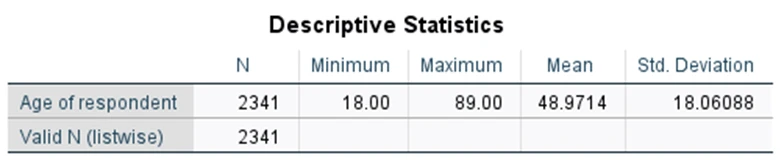
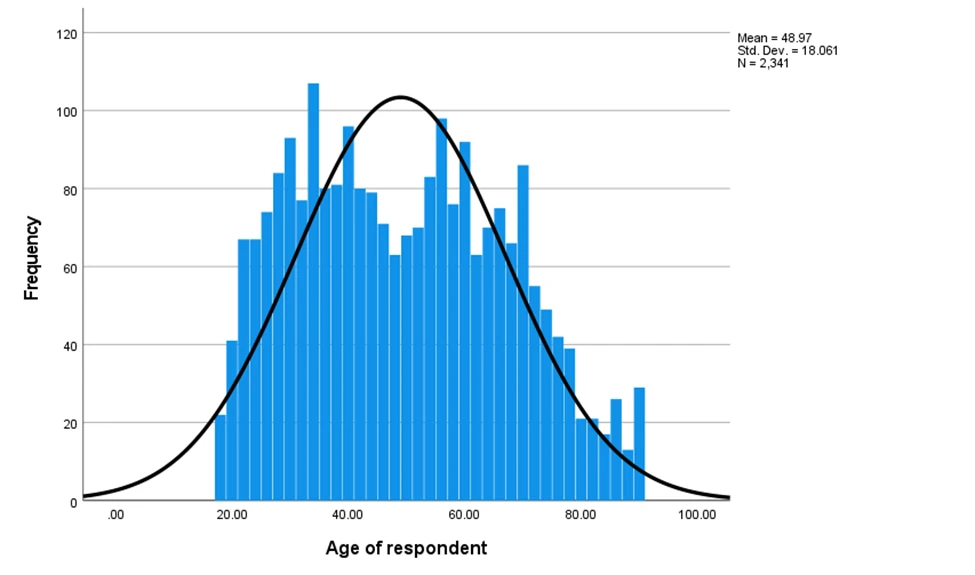
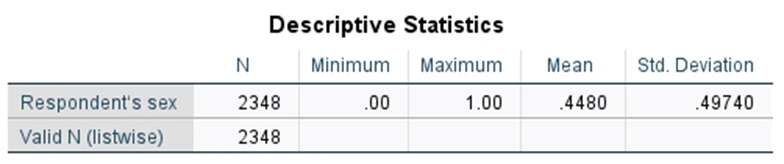
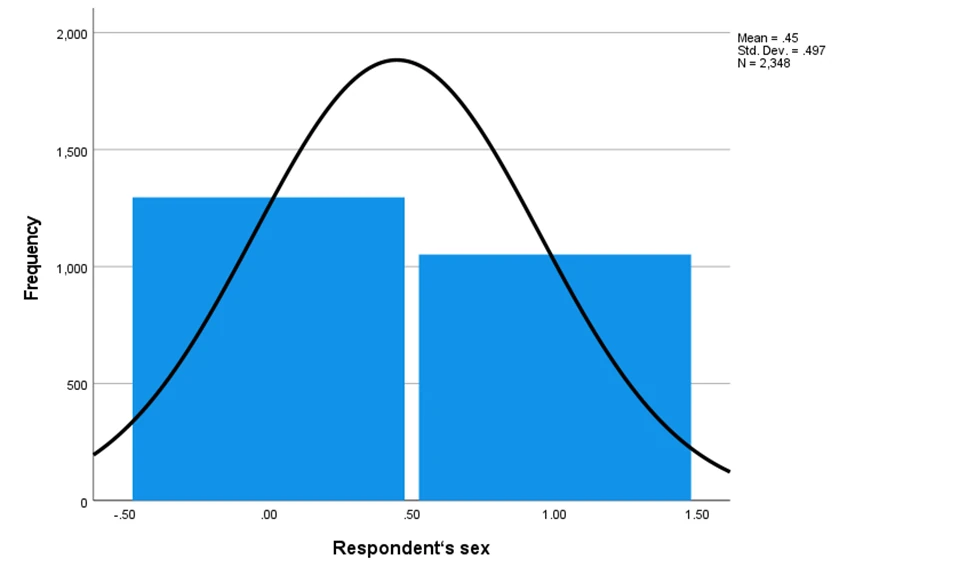
The demographic profile of the respondents shows considerable variation in age. The valid sample (N = 2341) ranged from 18 to 89 years, with a mean of 48.97 years (SD = 18.06). The histogram indicated an approximately normal distribution, suggesting the data are suitable for further parametric analysis. Gender distribution was relatively balanced, with the coding mean value (.45) reflecting near-equal representation of males and females (N = 2348). Marital status was also well distributed, capturing respondents across different categories of marital arrangements. These demographic indicators provide a robust foundation for examining social determinants of wellbeing and attitudes toward health-related issues. This refers to a strong foundation for analysing how age, gender and marital status shape wellbeing and social attitudes.
(Source: Self-made in SPSS)
(Source: Self-made in SPSS)
(Source: Self-made in SPSS)
(Source: Self-made in SPSS)
2.2 Subjective Well Being
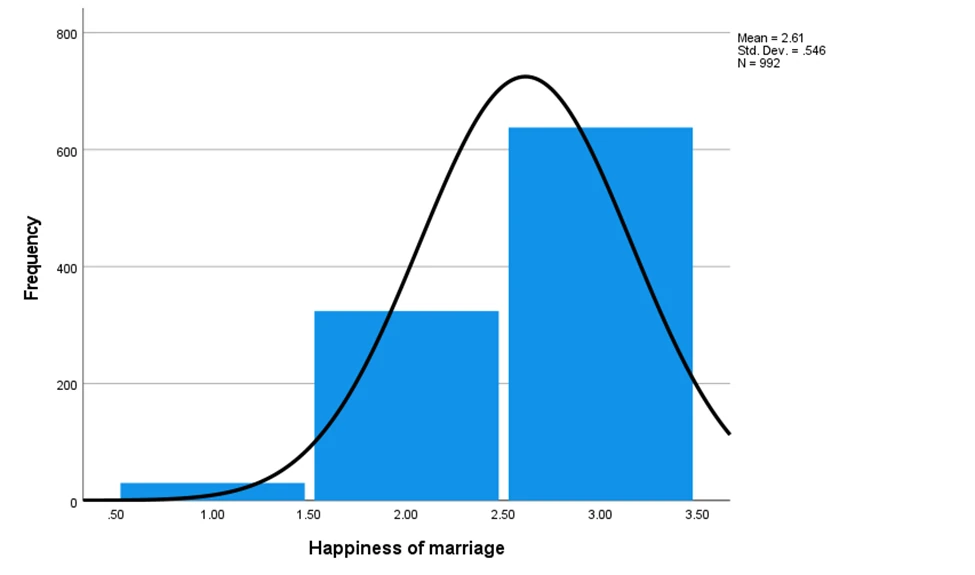
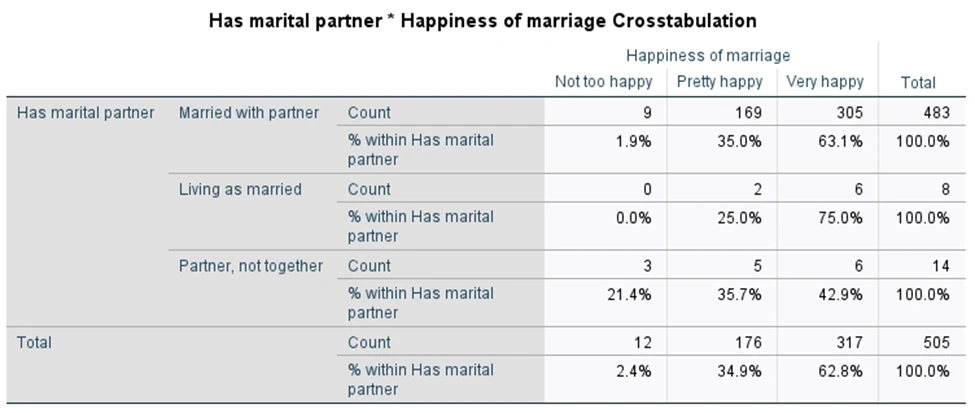
Analysis of marital happiness revealed 992 valid responses. Scores ranged between 1 (“Not too happy”) and 3 (“Very happy”), with a mean of 2.61 (SD = .55). The distribution showed that the majority of respondents considered themselves either “Pretty happy” or “Very happy” in their marriage. A cross-tabulation of marital status and marital happiness confirmed this trend. For example, among those married with a partner, 63.1% reported being “Very happy” compared to only 42.9% of those not living together with a partner. This descriptive relationship highlights differences in subjective wellbeing that are shaped by marital circumstances (Londero-Santos et al. 2021). This analysis denotes that a stable happy relationship helps to be much happier. This highlights the role of family support and partnerships as the protective factor of wellbeing.


(Source: Self-made in SPSS)
(Source: Self-made in SPSS)
(Source: Self-made in SPSS)
2.3 Environmental Concern
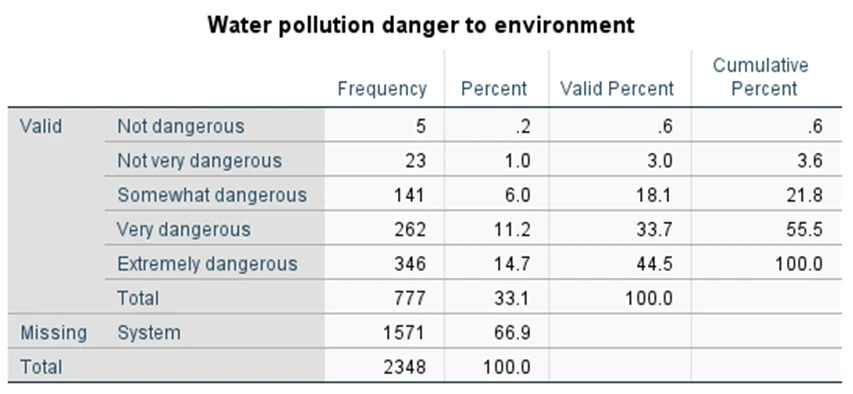
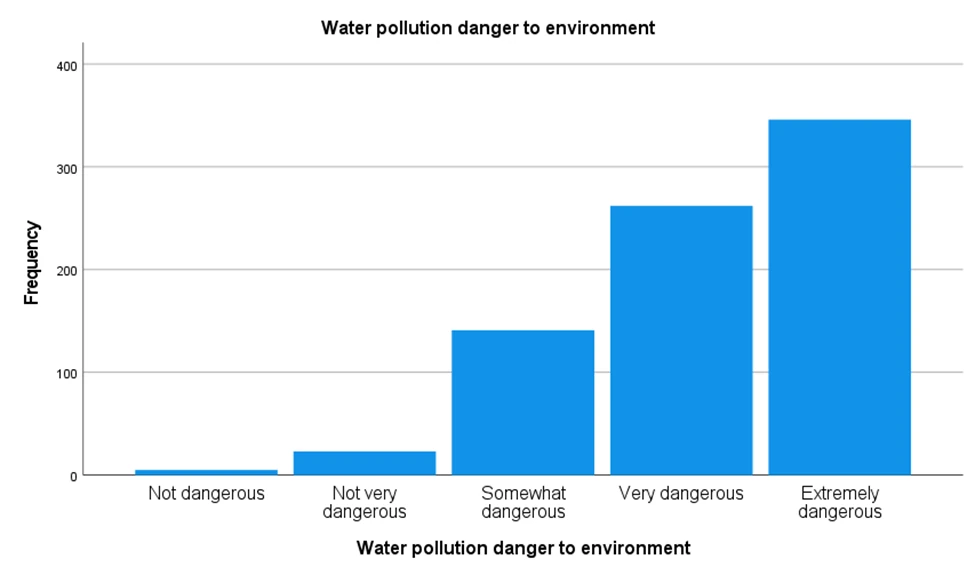
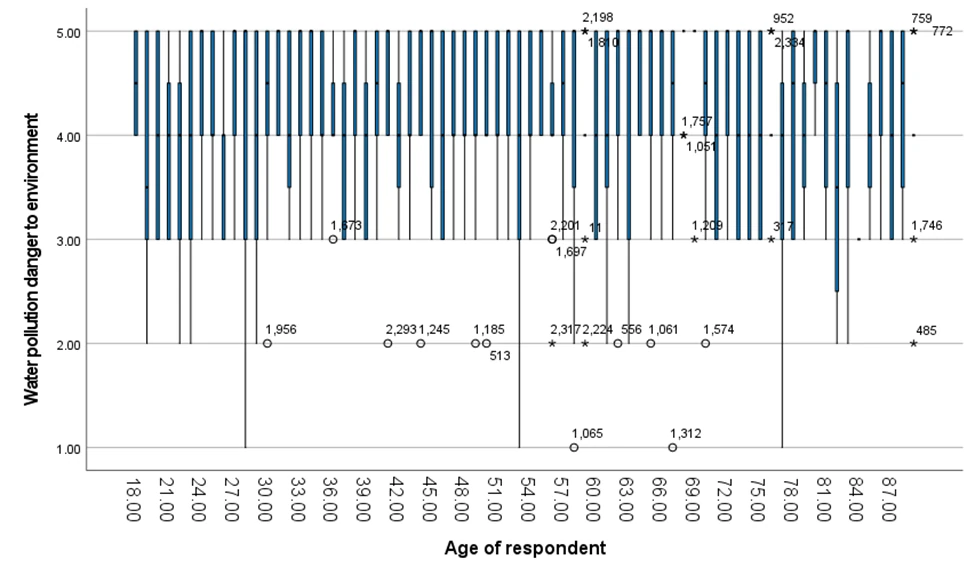
Perceptions of water pollution as an environmental threat were assessed for 777 valid cases. Only a small proportion (3.6%) perceived it as “Not dangerous” or “Not very dangerous.” In contrast, a large majority considered it either “Very dangerous” (33.7%) or “Extremely dangerous” (44.5%). The mean perception score was 4.19 (SD = .88), reflecting strong consensus that water pollution constitutes a serious environmental risk. A descriptive comparison across ages suggested that concern remained consistently high across younger and older groups, with mean scores generally above 4, indicating relatively stable perceptions across generations. High concerns among all ages indicate that water pollution is viewed as a universal public health issue. This shows strong collective awareness that transcends generational divides (Balasooriya et al. 2023).
(Source: Self-made in SPSS)
(Source: Self-made in SPSS)
2.4 Discrimination Perceptions
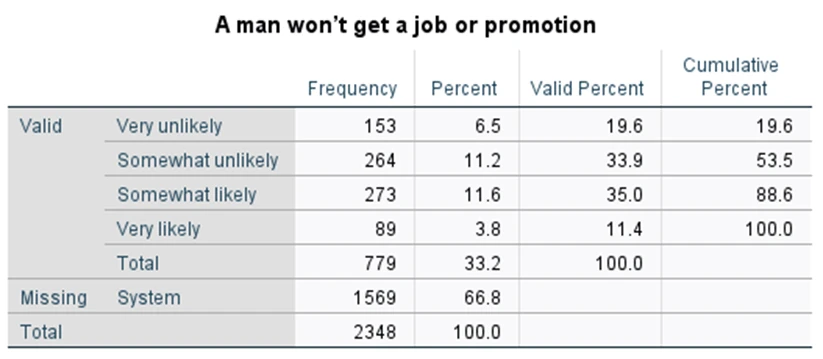
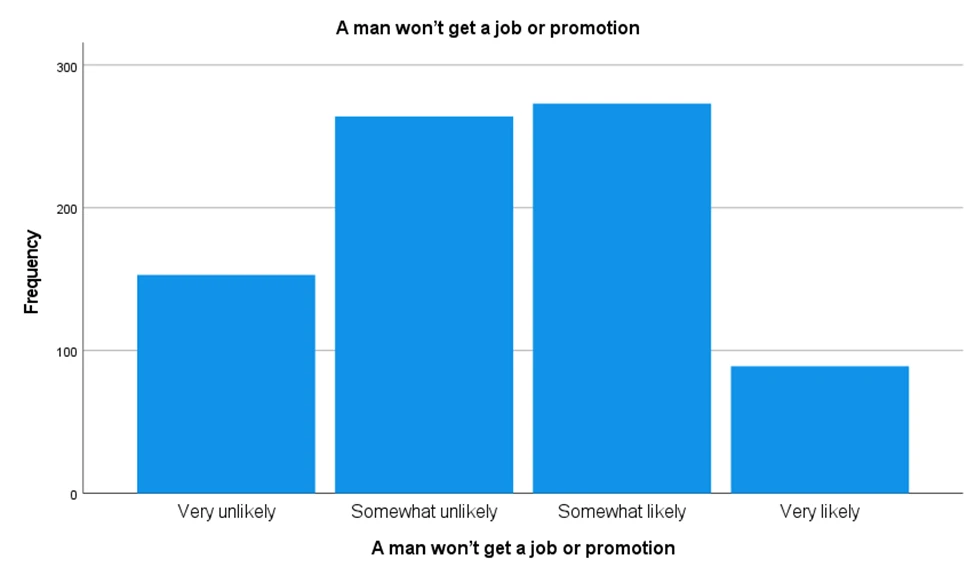
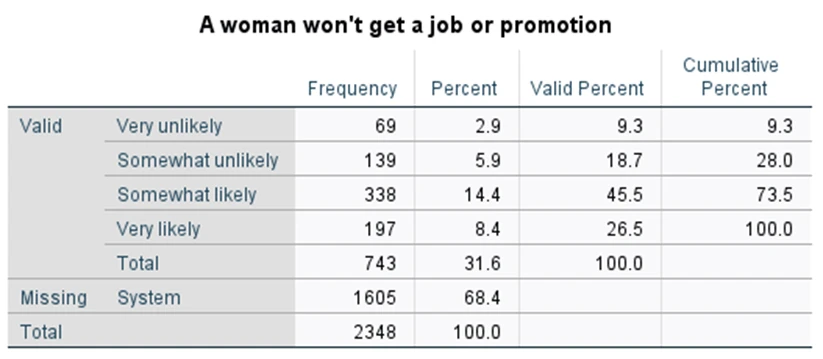
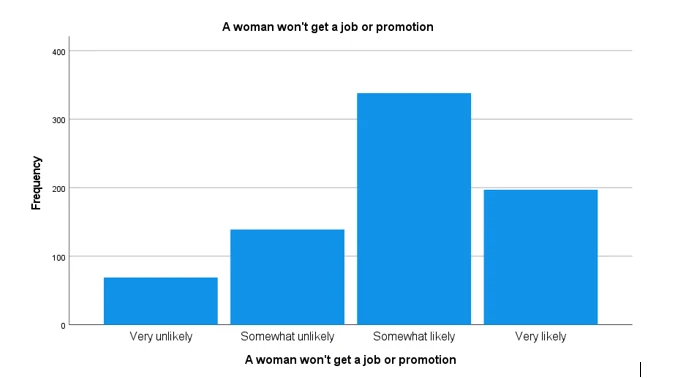
Perceptions of gender discrimination at work showed mixed results. For female disadvantage (N = 743), 45.5% reported it as “Somewhat likely” and 26.5% as “Very likely,” reflecting strong awareness of inequality. For male disadvantage (N = 779), responses were more moderate, with 35% indicating it was “Somewhat likely” and only 11.4% rating it as “Very likely.” These descriptive results suggest that respondents were more likely to recognise discrimination against women than against men (Ford et al. 2021). The stronger recognition of discrimination against women points to persistent gender inequalities in workplaces. This difference in perception may also affect how men and women experience stress and mental health at work.
(Source: Self-made in SPSS)
(Source: Self-made in SPSS)
(Source: Self-made in SPSS)
(Source: Self-made in SPSS)
2.5 Multiway Descriptives
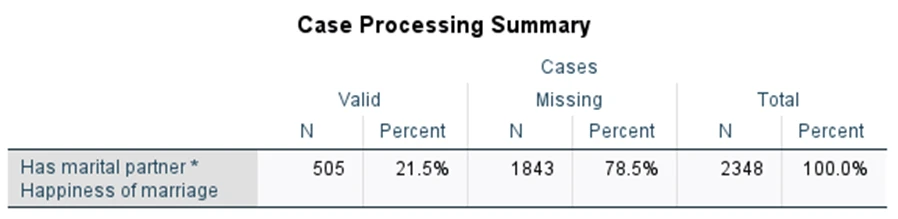
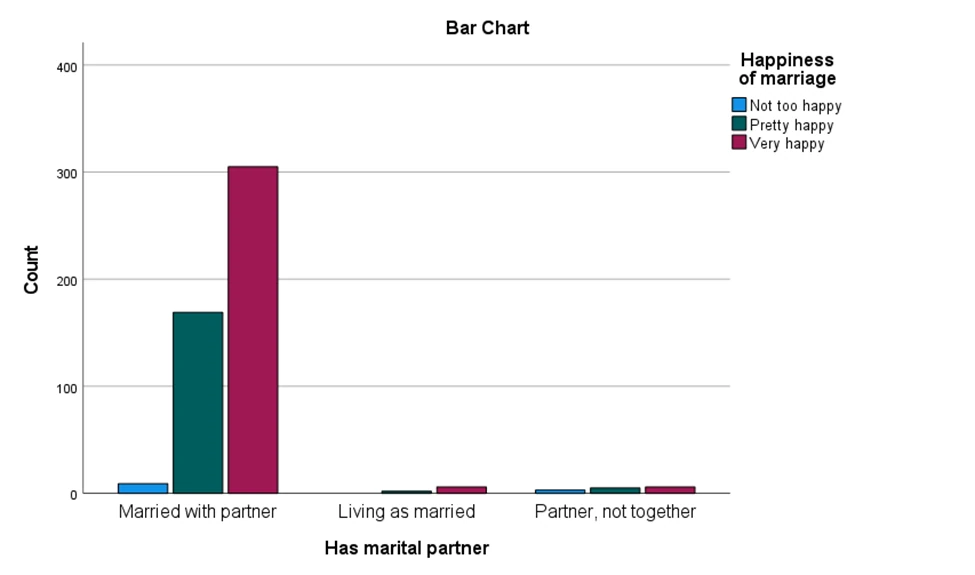
A cross-tabulation between marital status and marital happiness (N = 505) demonstrated a clear pattern. Among those married with a partner, 98.1% reported at least some happiness in marriage, compared with lower proportions in those not living together. The clustered bar chart highlighted that cohabiting respondents tended to report higher happiness than those separated. This two-way descriptive confirms that marital status is closely associated with subjective well being, reinforcing its role as a key social determinant of health (Ashford and Miotto, 2025). The collection among marital status and happiness denotes how social and family structure influence wellbeing. This also denotes that stronger partnerships provide emotional security that helps to improve mental health.
(Source: Self-made in SPSS)
(Source: Self-made in SPSS)
(Source: Self-made in SPSS)
3. Inferential Statistics
3.1 Chi-square Test of Independence
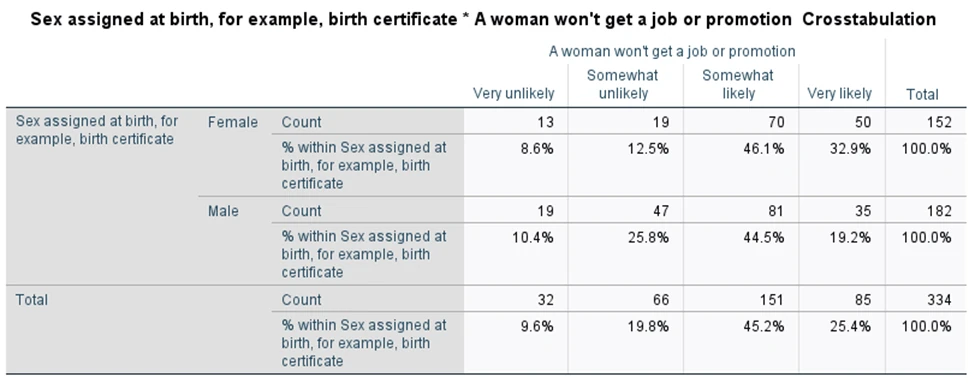
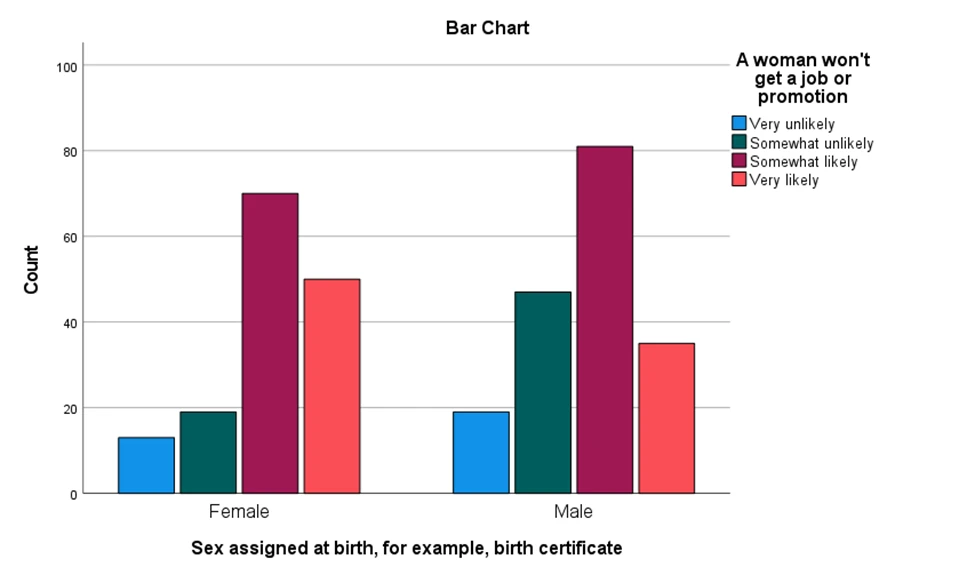
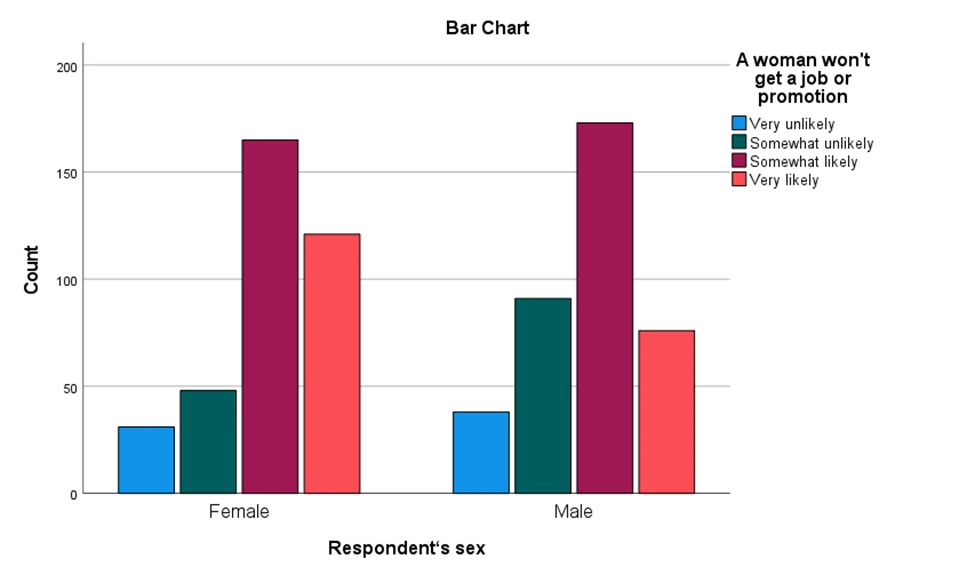
A Chi-square test of independence was conducted to examine the association between gender and perceptions of whether women are likely to face job discrimination in hiring or promotion. The valid sample included 743 respondents. Crosstabulation indicated that 33.2% of women believed discrimination was “very likely,” compared with 20.1% of men. Similarly, men were more likely than women to select “somewhat unlikely” (24.1% versus 13.2%). The Pearson Chi-square test confirmed that this difference was statistically significant, χ²(3, N = 743) = 24.26, p < .001. The clustered bar chart supported these findings, showing that women were more likely to perceive discrimination as a strong possibility, while men were comparatively more divided, with higher proportions in the “unlikely” categories. These results demonstrate a significant gender effect in perceptions of female disadvantage in employment, consistent with social patterns that recognise women as more attuned to or directly affected by workplace inequality (Russen et al. 2021). Gender is significantly related to perceptions of job discrimination against women, with women more likely than men to judge such discrimination as very likely.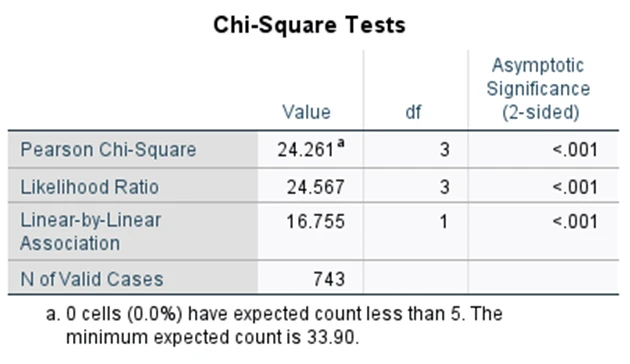
(Source: Self-made in SPSS)
(Source: Self-made in SPSS)
3.2 One-way ANOVA
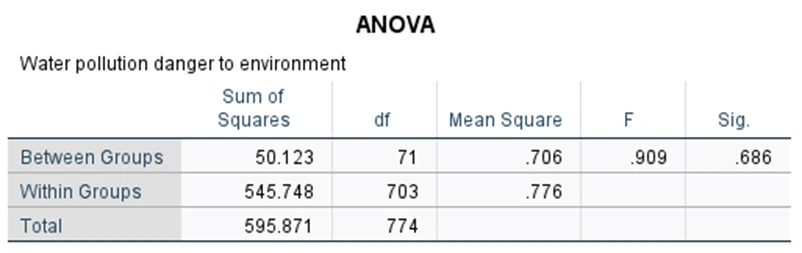
A one-way ANOVA was performed to investigate whether concern about water pollution differed significantly by age. The analysis included 775 valid responses, divided into 71 distinct age categories ranging from 18 to 89. Descriptive statistics showed consistently high concern across the age spectrum, with most groups reporting mean scores above 4 on the five-point scale. The ANOVA results indicated no statistically significant differences in concern across age groups, F(71, 703) = 0.91, p = .686. This suggests that perceptions of water pollution as a serious environmental danger were broadly shared across generations, with little evidence of generational divergence in attitudes. The boxplot confirmed the consistency of responses, showing only minor variations between younger and older respondents. Overall, the results suggest that environmental concern about water pollution is widely distributed across the population, irrespective of age, highlighting the universal recognition of this issue as a threat to public health (Benameur et al. 2022). There is no major difference in the concern regarding water pollution between different age groups, which points to high and uniform awareness within the population.
(Source: Self-made in SPSS)
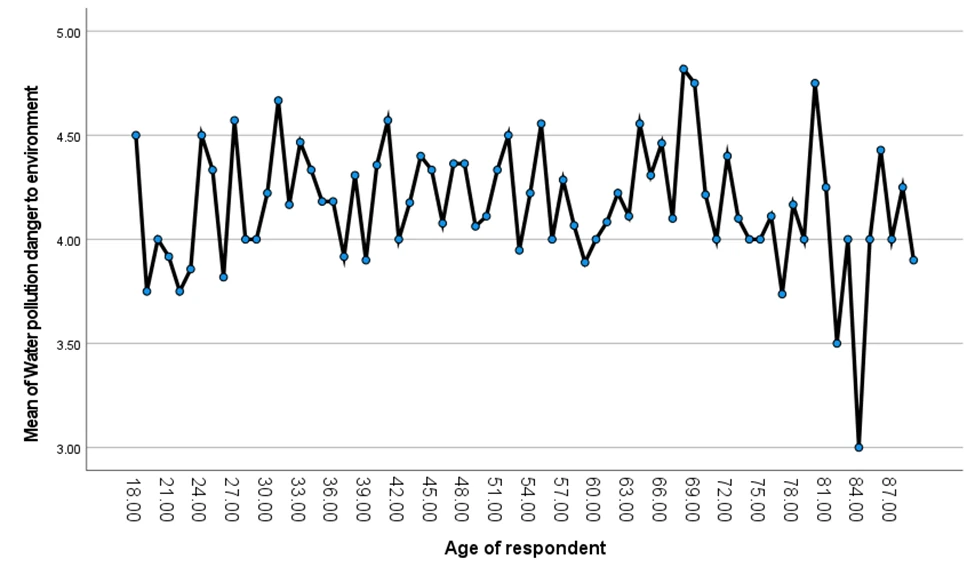
(Source: Self-made in SPSS)
4. Discussion
4.1 Gender and Perceptions of Discrimination
The Chi-square test showed a clear link between gender and views on women’s disadvantage in hiring and promotion. Most of the women voted for discrimination. This is a high concern because the personal experience and awareness made them show this in the survey. Women face discrimination in the workplace, society, or they witness discriminating against other womens or some mens even (Bhandari, 2023). Men seem to have less of a problem with discrimination. This refers to the inequality in the workplace, and this impacts on the gender specific workplace and society.
4.2 Marital Status and Subjective Happiness
This paper has analysed the happiness data along with the marital people count, focusing on analysing how much the married people are happy. This analysis ended up showing that the marital people are happier than the others. This refers to the relationships and partnerships helps to be happy and motivated for well-being. People without steady partnerships have been analyzed lower happiness, reflecting that close social ties can protect and strengthen mental health (Kislev, 2021). These results highlight how family life plays an important role in shaping overall wellbeing.
4.3 Age and Environmental Concern
There was no significant difference in age groups on the perceptions of water pollution as expressed in the ANOVA results. This implies that there is always a high level of concern regarding environmental risks irrespective of the generational differences. This collective understanding implies that there is dense collective awareness about environmental health hazards, which instead means that interventions and policies could be applied broadly and not limited to specific age groups.
4.4 Overall Implications
Combined, the analyses indicate that the demographic and social factors, especially gender and marital status, have a substantial impact on wellbeing and equity perceptions, whereas the health impacts of the environment are universally recognised. These results support the purpose of social context in influencing population health outcomes.
5. Conclusion
This report aimed at determining the degree to which demographic factors, viz., age, gender, and marital status, mediate the effects of wellbeing, social attitudes, and environmental health perceptions. The findings also indicated that both of the genders found that there had been massive differences in gender gap concerning all their comprehension of discrimination at work except that females had higher disadvantages. The strength of happiness based on marital status with strong dependence on the wellbeing benefits of stable marital unions was linked to marital happiness. On the other hand, environmental concern was not strongly correlated with age and was therefore highly generationally aware. These results reveal the value of biostatistical analysis in health, where it shows how demographic and social determinants affect wellbeing and attitudes, producing a more comprehensive picture on population health trends.
Reference list
Journals
- ASHFORD, D., & MIOTTO, G. (2025). Preventing Violence in Marital Relationships:: Essential Strategies for Building a Strong, Healthy, and Secure Bond Practical Approaches to Fostering Respect, Trust, and Emotional Safety in Couples. Giacomo Miotto. Accessed from: https://books.google.com/books?hl=en&lr=&id=7MpDEQAAQBAJ&oi=fnd&pg=PA7&dq=+stronger+partnerships+provide+emotional+security++that+helps+to+improve+mental+health.+&ots=90-FXIOu_j&sig=CnfiKftrXfZzGkS6lwQ49XghsH0 [Accessed on: 2.9.2025]
- Balasooriya, B. K., Rajapakse, J., & Gallage, C. (2023). A review of drinking water quality issues in remote and indigenous communities in rich nations with special emphasis on Australia. Science of The Total Environment, 903, 166559. Accessed from: https://www.sciencedirect.com/science/article/pii/S0048969723051847 [Accessed on: 2.9.2025]
- Benameur, T., Benameur, N., Saidi, N., Tartag, S., Sayad, H., & Agouni, A. (2022). Predicting factors of public awareness and perception about the quality, safety of drinking water, and pollution incidents. Environmental Monitoring and Assessment, 194(1), 22. Accessed from: https://link.springer.com/article/10.1007/s10661-021-09557-2 [Accessed on: 2.9.2025]
- Bhandari, M. P. (2023). Women and society a major field of studies to understand the discrimination. SocioEconomic Challenges, 7(2), 78-93. Accessed from: