1. Introduction: Project Management Plan (Scope, Schedule, And Cost)
Access Free Samples Prepared by our Expert Subject Matter Experts, known for offering the Best Online Assignment Help Services in Australia.
A "project management plan" has mainly contained a set of overall documents that has outlined all the major work activists and their implications on planning, control and effective execution. The main aim of this project is to analyze and select a real-life project and make implications for each activist and aspect that is critically related to the conducted work. The implications of changing the data sets with effective selection of the project have effective implications on conducting work with effective development. It has an effective overview of the valuation of several aspects and activists as "proposition, communication tools and protocols, execution steps, risks, stakeholders (and their roles), resources and required deliverables' '. The valuation of the major work reflection with adequate stages has analyzed and made changes in the way of project proportions in an effective manner.
Working on a similar project management plan and finding it overwhelming? Our management assignment help in Australia experts can guide you through scope, schedule, and cost analysis.
Background of the project
It has selected Corridor development projects in New South Wales (NSW) which are generally known as "Corridor preservation and gazettal". The development of the NSW has included several developments that have included the "Corridor preservation and gazettal" project based on the proper development of rail lines at the different land stages. Based on the research work of Rauscher (2021), this project is basically based on the development of the rail line in the NSW that can help to connect the other areas and reach in less time for example developing the rail line from "Newcastle to Sydney" with the adequate rail line development project and making a reflection on the overall conducted project development work. The distance between Newcastle and Sydney has been effectively estimated as the distance is approximately "105 miles (170 km)" which has been used under the effective development of the project work at the adequate work relation. The development of the project can be one of the effective milestones in the area as it can make changes in the way people live and their lifestyles as well.
Justification for the selection of this project
The main reason behind the selection of this project apart from the others is the reserve land process that can make implications in the way to development. As per the conducted research by Gregor et al. (2019), the use of the "corridor preservation process" can make implications improving the knowledge and understanding related to the "land preservation process" and make changes in securing the land work with an effective valuation of the related data range. the use of an effective data set based on conducting work on land preservation along with the use of a proper way that can help in preventing the land that is mainly available for required future development. The proper use of accomplished work with changes in a major way can be the required aspect that has helped in developing information regarding the upcoming year's work which will be conducted over different aspects in a similar area.
Constraints and Objectives
Constraints in the corridor project
The valuation of the major constraints in the Rail line project has been accumulated in terms of "Space consumption, changes in the designing, valuation of the several errors, cooperations of the other related aspect based on raw materials supply issue". The use of these issues and constraints has an effective implication for conducting the rail line corridor project in a brief way.
Objectives
The valuation of the major purpose of the project has been analyzed in terms of having the critical changes in the work development and its effective valuation of the rail line corridor project. The main objective has been stated to conduct the project and accomplish it within 165 days. It has been one of the effective ways of accomplishment in completing the project in an adequate time period then it can help in providing adequate results.
2. Scope Management Plan
Project Scope Statement
The main scope of the project is to provide an effective link for "future transport infrastructure" and make a reflection on the overall conducted work to support the required connection and make a reflection across the two required links "Greater Sydney and regional NSW". The valuation of the conducted structure with appropriate development in the work changes has implied the providing the effective relation at the required aspect.
Limits and Assumptions
The valuation of the major changes in the adequate relation has effectively implied an accumulation of related aspects worth the rail line project. Based on the conducted research work of Adams et al. (2022), the use of required rail line projects has effective integration and it can be one of the required limitations in this project. The required limitation in the project is "Space consumption, changes in the designing, valuation of the several errors, cooperation&s of the other related aspects based on raw materials supply issue" and have proper analysis at all stated ranges. The adequate valuation of all the changes in the stated work has accumulated and conducted work at the adequate workplace.
WBS structure
The preparation of the WBS structure is one of the major aspects that can help in accumulating the required task and accomplishing work at an adequate time. The use of the WBS structure has clearly shown that it has the five required stages that have implied the adequate data range and accomplished the entire work at the adequate range (Carney et al. 2019).
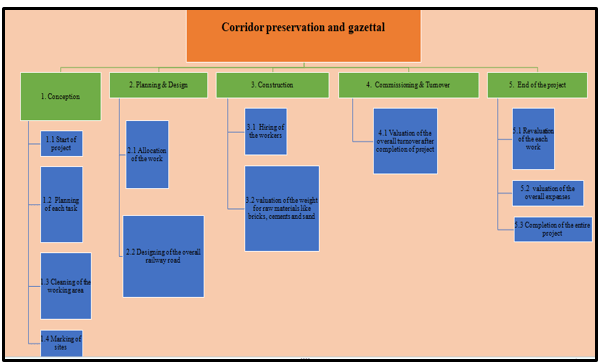
Figure 1: WBS structure for "Greater Sydney and Regional NSW"
The WBS structure of "Greater Sydney and Regional NSW" has implied the required work that has conducted major stages such as “Conception, Planning & Design, Construction, Commissioning & Turnover and End of the project” (Baker and Liew, 2019). Each of the milestones implied with the work reflects that estimated with the milestones that are included in each task.
Work packages
The work package is mainly the effective collection ensure task that is related to the overall prepared project. It has mainly implied an accumulation of the stated task that has a brief valuation of the deliverable and other "specific project phases" (Fogarty, 2022). The development of each related aspect has critically implied the work package that has helped in conducting the work at the adequate range and providing specification at the milestone and other variables range.
WBS dictionary
The preparation of the WBS structure is one of the major aspects that can help in accumulating the required task and accomplishing work at an adequate time. The use of the WBS structure has clearly shown that it has the five required stages that have implied the adequate data range and accomplished the entire work at the adequate range.
|
“WBS Dictionary with adequate cost estimation |
||||
| WBS Level | WBS | Task Name | WBS Description | Cost in $ |
|---|---|---|---|---|
| 0 | 0 | Conception | Corridor preservation and gazettal | |
| 1 | 1 | Start of project | start of the Corridor preservation and gazettal | |
| 2 | 1.1 | Planning of each task | Proper planning of the constructed project | 5000 |
| 2 | 1.2 | Cleaning of the working area | Clean of the entire area where work is conducted | 500 |
| 2 | 1.3 | Marking of sites | Marking of the entire site based on the provided plant | 2000 |
| 2 | 1.4 | Purchase of raw materials | Purchase of raw material and other related aspect for proceeding with the project | |
| 3 | 1.5 | Setup of the washroom for workers | Conducting work related to bathroom set up in the constructed wor area | 1550 |
| 1 | 1.6 | Stocking of the all raw materials | Organizing required area for store raw materials | 3400 |
| 2 | 2 | Planning & Design | Select the venue for meeting to plan | |
| 2 | 2.1 | Allocation of the work | Allocate work based on the specialty of each workers and other managers | 1000 |
| 1 | 2.2 | Designing of the overall railway road | designing of the entire work based on provided design | 2000 |
| 2 | 2.3 | designing of track | Valuation of the area based on the provided design | 100 |
| 3 | 2.4 | estimating of Rail track area | Proper valuation of working area based on rail track design | 5000 |
| 3 | 3 | Construction | Execution of the planning | |
| 3 | 3.1 | Hiring of the workers | Publishing articles in newspaper for recruitment of temporary worker | 300 |
| 2 | 3.2 | valuation of the weight for raw materials like bricks, cements and sand | Valuation of raw materials weight | 1200 |
| 3 | 4 | Commissioning & Turnover | finalize area and construction area with the provided design | |
| 3 | 4.1 | Valuation of the overall turnover after completion of project |
estimation of turnover after completion of certain part work |
1500 |
| 3 | 5 | End of the project | Last stage of the project | |
| 2 | 5.1 | Revaluation of the each work | Recheck of all accomplished work | 250 |
| 2 | 5.2 | valuation of the overall expenses | Recheck of all the expenses incurred during the project | 250 |
| 1 | 5.3 | Completion of the entire project | Finalize and confirm completion of project | 1000 |
| Total expenses | 26050 | |||
Table 1: WBS Dictionary with adequate cost estimation
The use of the WBS structure and dictionary has a brief valuation and description of each aspect that has a major effect on the entire conducted project. The use of viability and all related milestones in the project has a brief valuation of the entire data range and accomplish effective cost valuation as well.
Control (cost) accounts
The “management control point” is where “scope, budget, real cost, and schedule” are integrated and performance will be estimated. To summarize activities in associate logs, control accounts are effectively utilized in the different ranges of general logs (Acosta-Dacal et al. 2021). They have mainly provided an overview of each catalog and design to balance and are frequently operated in accounts other related accounts.
Scope Validation and Control
The effective valuation of scope control with adequate validation has implied conducting the project at the brief range. The valuation of the scope of the project is determined by the accumulation of the project's effectiveness to develop a Rail line near the NSW and make implications on the entire conducted work (Negi et al. 2022). Required control on the executed operations has estimated and accomplished work at the provided time for 165 days. The completion of each activity is completely determined with adequate changes in the entire data range that has implicated providing effective results for development in the rural areas near the "new south Wales".
Scope change control
The "scope change control" is effectively determined based on the required valuation of several aspects that lead to an accomplished work process at the effective range. The Scope change control" is mainly determined as an effective process in a project that has included proper estimation of "quality, functionality, timeline, layout, budget, responsibilities, or other aspects that are related to the project"
“Change control boards (CCB)” and roles and responsibilities
The use of a "change control board" has a positive impact over an accumulation of the entire stated data range and makes implications on the conducted result. The valuation of the required roles and responsibilities for CCB has accumulated based on the valuation of the other related aspect (Rufat et al. 2020). The main responsibility of CCB has been analyzed as it can help in analyzing effective risk competent in the project and make a reflection on the way to accomplish the project for future consideration. The use of effective data accumulation has a proper effect on stating the result that implicated associated risk and other benefits from the project.
3. Schedule Management Plan
Activity List:
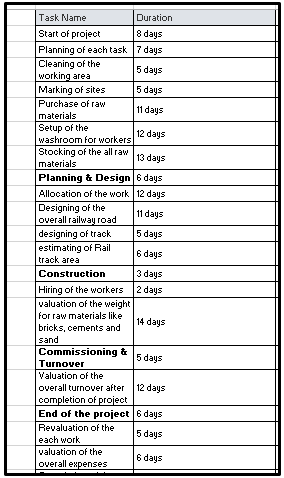
Figure 2: Activity List
The figure shows the activity list of the development of the rail line from Newcastle to Sydney. In this figure, there are details of each and every task related to the project. On the other hand, it can be said that starting the project takes a total of 8 days and planning for each task takes a total of 7 days. However, a total of 11 days takes to purchase the raw materials for the project. The purpose of project planning and designing takes a total of 6 days. Through the activity task format project management team are able to know the proper time allocating of the required tasks. Without the proper time allocation for each task, it became very tough for the workers to complete their work in a scheduled format. For the purpose of the project estimation of the rail track area, it takes a total of 6 days. Moreover, hiring of workers and construction are taken respectively 2 days and 3 days. On the other hand, it can be said that each work revaluation takes a total time of 5 days and for valuation of each task takes a total of 6 days.
Activities Sequence Relationships
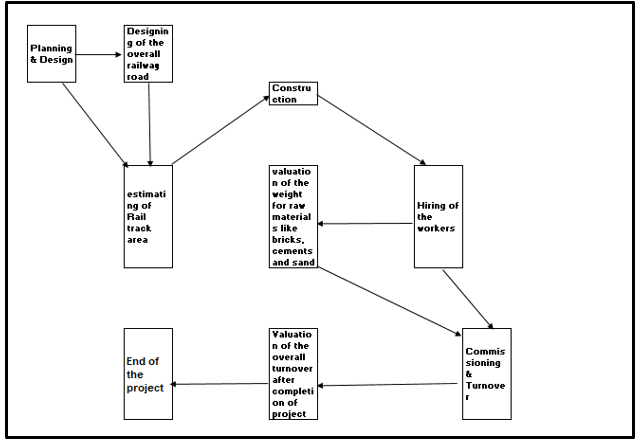
Figure 3:Activities Sequence Relationships
Gantt Chart
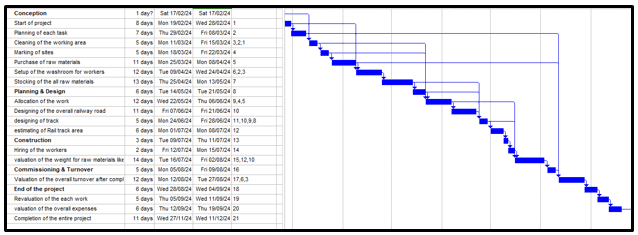
Figure 4: Gantt Chart
The above figure shows the Gantt chart of developing the rail line from "Newcastle to Sydney". It shows that starting the project takes a total of 8 days and planning for each task takes a total of 7 days. However, a total of 11 days takes to purchase the raw materials for the project. The purpose of project planning and designing takes a total of 6 days. Through the activity task format project management team are able to know the proper time allocating of the required tasks. Without the proper time allocation for each task, it became very tough for the workers to complete their work in a scheduled format. For the purpose of the project estimation of the rail track area, it takes a total of 6 days. Moreover, hiring of workers and construction are taken respectively 2 days and 3 days.
4. Schedule Management Plan
PERT:
The “Scheduled Management Plan” is a detail of the project's schedule and planning. However, the meaning of PERT is “Program Evaluation and Review Technique”, which is basically a tool for project management. On the other hand, it can be said that PERT is a most useful tool for setting the individual activities of a particular project. Although, it is also helpful for calculating the needed time for completing each task. The diagram of PERT indicates the all required activities sequence and their independencies. However, PERT is also helpful for understanding the critical path and the longest sequence of all the activities. In addition, analyzing the PERT is also helpful for determining the timing of each task and activity.
Through task analysis, the project leaders are able to decide the earliest path for completing the project (Ba'Its et al. 2020). There are several advantages to using the PERT analysis. PERT helps to identify the most critical path of the following project and through this identification, the leaders can make their decision on the accurate time of completing the project. However, when the project management team is more focused on the critical path of the project then they are able to allocate the right resources for completing the project. In another case, PART also provides a visual representation of the selected project. It helps the project managers to communicate and be more focused on the required project (Yuliarty, 2021). The stakeholders of the projects are also known for the selected project. Everyone who is engaged with the project is understanding the project in a clear way. There are no types of misunderstanding or communication gaps created on the selected project.
Project managers are able to take the more effective decision for the selected project and make everyone sure that the project is going on the right track
PERT activity list:
Project Tasks and Duration
| Task Name | Duration |
|---|---|
| Start of project | 8 days |
| Planning of each task | 7 days |
| Cleaning of the working area | 5 days |
| Marking of sites | 5 days |
| Purchase of raw materials | 11 days |
| Setup of the washroom for workers | 12 days |
| Stocking of all raw materials | 13 days |
| Planning & Design | 6 days |
| Allocation of the work | 12 days |
| Designing of the overall railway road | 11 days |
| designing of track | 5 days |
| estimating of Rail track area | 6 days |
| Construction | 3 days |
| The hiring of the workers | 2 days |
| valuation of the weight for raw materials like bricks, types of cement and sand | 14 days |
| Commissioning & Turnover | 5 days |
| Valuation of the overall turnover after completion of project | 12 days |
| End of the project | 6 days |
| Revaluation of the each work | 5 days |
| valuation of the overall expenses | 6 days |
| Completion of the entire project | 11 days" |
Table 2: PERT activity list
Calculation of Activity expected time; Project expected time, project variance and standard deviation:
PERT Activity List Table
| PERT activity list | optimistic | Most likely | Pessimistic | Expected Duration | Standard deviation | |
|---|---|---|---|---|---|---|
| Task Name | Duration | |||||
| Start of project | 8 days | 8 | 9 | 12 | 9.3 | 0.67 |
| Planning of each task | 7 days | 7 | 8 | 8 | 7.8 | 0.17 |
| Cleaning of the working area | 5 days | 5 | 7 | 7 | 6.7 | 0.33 |
| Marking of sites | 5 days | 5 | 7 | 7 | 6.7 | 0.33 |
| Purchase of raw materials | 11 days | 11 | 12 | 12 | 11.8 | 0.17 |
| Setup of the washroom for workers | 12 days | 12 | 13 | 13 | 12.8 | 0.17 |
| Stocking of the all raw materials | 13 days | 13 | 14 | 14 | 13.8 | 0.17 |
| Planning & Design | 6 days | 6 | 7 | 7 | 6.8 | 0.17 |
| Allocation of the work | 12 days | 12 | 13 | 13 | 12.8 | 0.17 |
| Designing of the overall railway road | 11 days | 11 | 12 | 12 | 11.8 | 0.17 |
| designing of track | 5 days | 5 | 7 | 7 | 6.7 | 0.33 |
| estimating of Rail track area | 6 days | 6 | 7 | 7 | 6.8 | 0.17 |
| Construction | 3 days | 3 | 4 | 4 | 3.8 | 0.17 |
| Hiring of the workers | 2 days | 2 | 3 | 3 | 2.8 | 0.17 |
| valuation of the weight for raw materials like bricks, cements and sand | 14 days | 14 | 15 | 15 | 14.8 | 0.17 |
| Commissioning & Turnover | 5 days | 5 | 6 | 6 | 5.8 | 0.17 |
| Valuation of the overall turnover after completion of project | 12 days | 12 | 13 | 15 | 13.2 | 0.50 |
| End of the project | 6 days | 6 | 7 | 8 | 7.0 | 0.33 |
| Revaluation of the each work | 5 days | 5 | 6 | 7 | 6.0 | 0.33 |
| valuation of the overall expenses | 6 days | 6 | 7 | 8 | 7.0 | 0.33 |
| Completion of the entire project | 11 days | 11 | 12 | 13 | 12.0 | 0.33 |
| total | 165 | 189 | 198 | 186.5 | 5.5 | |
Table 3: Schedule management plan
The table shows the project schedule plan of the selected project. A total of 11 days takes to purchase the raw materials for the project. However, the purpose of project planning and designing takes a total of 6 days. The hiring of workers and construction are taken respectively 2 days and 3 days.
5. Cost Management Plan
Roles and Responsibility of cost management plan:
The “cost management plan” is an outlined statement which indicates all cost budgets of the selected project. The cost plan of the project will be able to define the roles and responsibilities of the cost management plan. One of the effective responsibilities of the “Cost management plan” is the cost estimation of the selected project. On the other hand, it can be said that cost estimation is the type of statement that defines each and every cost of the selected project. This statement contains the labor charges, the equipment charges and also the fixed and variable costs of the selected project (Venkataraman and Pinto, 2023.). However, in the “cost management plan” there is a proper analysis of the cost budget of the selected project.
Through cost budgeting the managers are able to see whether there is a need to improve and where not. The cost budgeting also includes each cost along with the tracking expenses of developing the rail line from "Newcastle to Sydney". Based on the views of Blocher et al. (2019), the plan will help the project monitors monitor the whole project in a proficient manner. Project leaders are able to make effective decisions regarding the project of developing the rail line. Altogether, the “cost management plan” is a basic record that helps ensure that project costs are worked effectively throughout the project's life process. By specifying roles and duties, setting procedures for cost assessment and control, and supplying clear transmission and reporting, the plan helps the project team to stay on the path and deliver the project within budget.
Estimating Methods:
Analogous techniques: In this technique, the cost manager is able to calculate the costs in both duration techniques. However, this technique is also called the method of “Top-Down Estimating”. One of the main advantages of this technique is that the process is less time-consuming along with less expensive.
Parametric technique: This technique is quite similar to the technique of Analogous estimating. On the other hand, it can be said that the calculation of the parametric technique is more accurate than the calculation of Analogous techniques (Relich and Świć, 2020). This technique can also be applied all over the project or the specific part of the selected project.
“Three-Point method”:
This method is basically used for estimating the project risk and uncertainty. These methods include the “optimistic method”, and “pessimistic method” and the last one is the “most likely method”. The “optimistic method” represents the best-case activity of the selected project. The “pessimistic method” indicates the most destructive case of the selected project. However, the last one “most likely” indicates the possible problems of the selected project.
List of cost elements:
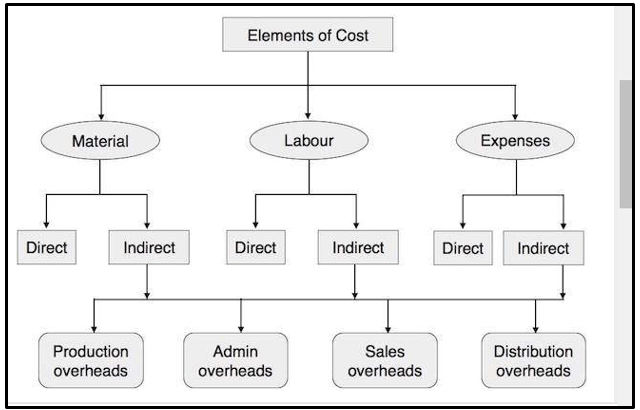
Figure 5: List of cost elements
(Source: Iqbal et al. 2019)
The above figure describes the all-over list of cost elements of the project. There are three main types of cost elements that have to be seen in that project work. The of costs is the “material cost, labor cost and cost of expenses”. However, under the indirect costs, there are the costs like the “costs of production overhead”, “the cost of admin overhead” and also the “cost of distribution overhead”.
Fixed Cost Table
| Fixed cost | Amount |
|---|---|
| Insurance | 1950 |
| Inspections | 4750 |
| Amortization | 83100 |
| Service and maintenance | 125369 |
| taxes | 45000 |
| Rent | 30000 |
| 290169 |
Table 4: calculation of fixed costs
The table shows the fixed costs of the selected project.
| Variable cost | amount |
|---|---|
| electricity | 43500 |
| water | 47000 |
| technology | 12547 |
| fuel | 24600 |
| total | 127647 |
Table 5: Calculation of Variable costs
Contingency reserves
Contingency reserves are the types of reserves that are to play a safeguard role against any loss of the firm or company. On the other hand, it can be said that reserve plays a vital role when the following project suffers sudden loss and needs capital for overcoming the situation (Kwon and Kang, 2019). However, the BOD provides a notice that the contingency reserve will not be distributed to the shareholders of the firm.
Contingency Reserve Table
| Particular | values | |
|---|---|---|
| Cost of project | 230000 | |
| risks of contingency | 25% | |
| Amount | 57500 | |
Table 6: Contingency reserve
Table 6: Contingency reserve
The table shows the calculation of the contingency reserve of the following project. In that case, it assumes that there are 25% of contingency and the cost of the project is 230000.
Monitoring and controlling costs
The first thing to monitor and control the cost management of the project is to define the roles and obligations of the project team associates and stakeholders in managing project costs. This contains identifying who will be liable for estimating costs, managing the funding, and monitoring and controlling expenses. The plan should define how cost information will be displayed to stakeholders and supporters. This includes installing reporting procedures and forms, defining the frequency of reporting, and remembering who will be liable for preparing and disseminating reports.
6. Conclusion
It has been concluded that the completion of the project is effectively conducted based on the adequate valuation of related aspects in each milestone appropriately. It has implied that "Corridor preservation and gazettal" has the effective development on completing the work at the adequate range. It has mainly 5 tasks created that have helped in preparing the WBS structure and conducting work at the adequate data range. The use of effective data valuation and another related milestone in each task is one of the most effective ranges that has helped in conducting each task effectively due to the link of another milestone task at the effective range. It has effectively prepared the WBS project with the adequate WBS dictionary that has helped in reflecting each stated milestone at the adequate range. On the other hand, computation of all related aspects such as "Activity expected time, Project expected time, project variance and standard deviation" has effectively delivered an adequate result that makes implications on the entire data set. The use of an effective and adequate data set has required work development that needs to be measured with a valuation of other conducted work.
Reference
- Abelson, P., 2023. The principles and practice of local government in the Australian three-tiered system of government: With special reference to the roles of state and local government in New South Wales. Available at SSRN.
- Acosta-Dacal, A., Rial-Berriel, C., Díaz-Díaz, R., Bernal-Suárez, M.D.M., Zumbado, M., Henríquez-Hernández, L.A., Alonso-González, P., Parga-Dans, E. and Luzardo, O.P., 2021. Validation of a method scope extension for the analysis of POPs in soil and verification in organic and conventional farms of the Canary Islands. Toxics, 9(5), p.101.
- Adams, P., Inglis, S. and Proctor, J., 2022. The broadband futures forum: Regional connectivity and shared infrastructure in NSW and New Zealand. Journal of Telecommunications and the Digital Economy, 10(3), pp.1-13.
- BaIts, H.A., Puspita, I.A. and Bay, A.F., 2020. Combination of program evaluation and review technique (PERT) and critical path method (CPM) for project schedule development. International Journal of Integrated Engineering, 12(3), pp.68-75.
- Baker, B. and Liew, N., 2019, December. Governance and engagement to optimize outcomes for public transport mega-projects. 9th State of Australian Cities National Conference, 30 November-5 December 2019, Perth, Australia.
- Blocher, E.J., Stout, D.E., Juras, P.E. and Smith, S., 2019. Cost Management (A Strategic Emphasis) 8e. McGraw-Hill Education.
- Carney, M., Vetta, I., Strickland, K. and Newton, P., 2019. 15 Lower Fort Street, Dawes Point NSW-Final Archaeological Report-prepared for Global Projects NSW.
- Fogarty, K., 2022. Eliciting post-mining land-use preferences and values: an open cut coal mine in New South Wales, Australia.
- Gregor, S., Beavan, G., Culbert, A., Kan John, P., Ngo, N.V., Keating, B., Sun, R. and Radwan, I., 2019. Patterns of pre-crash behaviour in railway suicides and the effect of corridor fencing: a natural experiment in New South Wales. International journal of injury control and safety promotion, 26(4), pp.423-430.
- Iqbal, J., Omar, M. and Yasin, A., 2019. The impact of agile methodologies and cost management success factors: An empirical study. Baghdad Science Journal, 16(2 Special Issue (ICICI 2019)).
- Kwon, H. and Kang, C.W., 2019. Improving project budget estimation accuracy and precision by analyzing reserves for both identified and unidentified risks. Project Management Journal, 50(1), pp.86-100.
- Negi, B., Kalra, K. and Vandana Pokhriyal, J., 2022. Process Validation In Pharmaceutical Industries. Journal of Pharmaceutical Negative Results, pp.3511-3516.
- Rauscher, R., 2021. Planning and Financing Growth Centres-Role of Local, State and Federal Governments (Central Coast Region, NSW, Case Study). NSW, 1.
- Relich, M. and Świć, A., 2020. Parametric estimation and constraint programming-based planning and simulation of production cost of a new product. Applied sciences, 10(18), p.6330.
- Rufat, S., Tate, E., Emrich, C.T. and Antolini, F., 2020. Answer to the CDC: Validation Must Precede Promotion. Annals of the American Association of Geographers, 111(4), pp.em-vii.
- Venkataraman, R.R. and Pinto, J.K., 2023. Cost and value management in projects. John Wiley & Sons.
Yuliarty, P., 2021. Construction Service Project Scheduling Analysis Using Critical Path Method (CPM), Project Evaluation and Review Technique (PERT). work, 10, p.F1.


 9 Years | PhD in Management / MBA