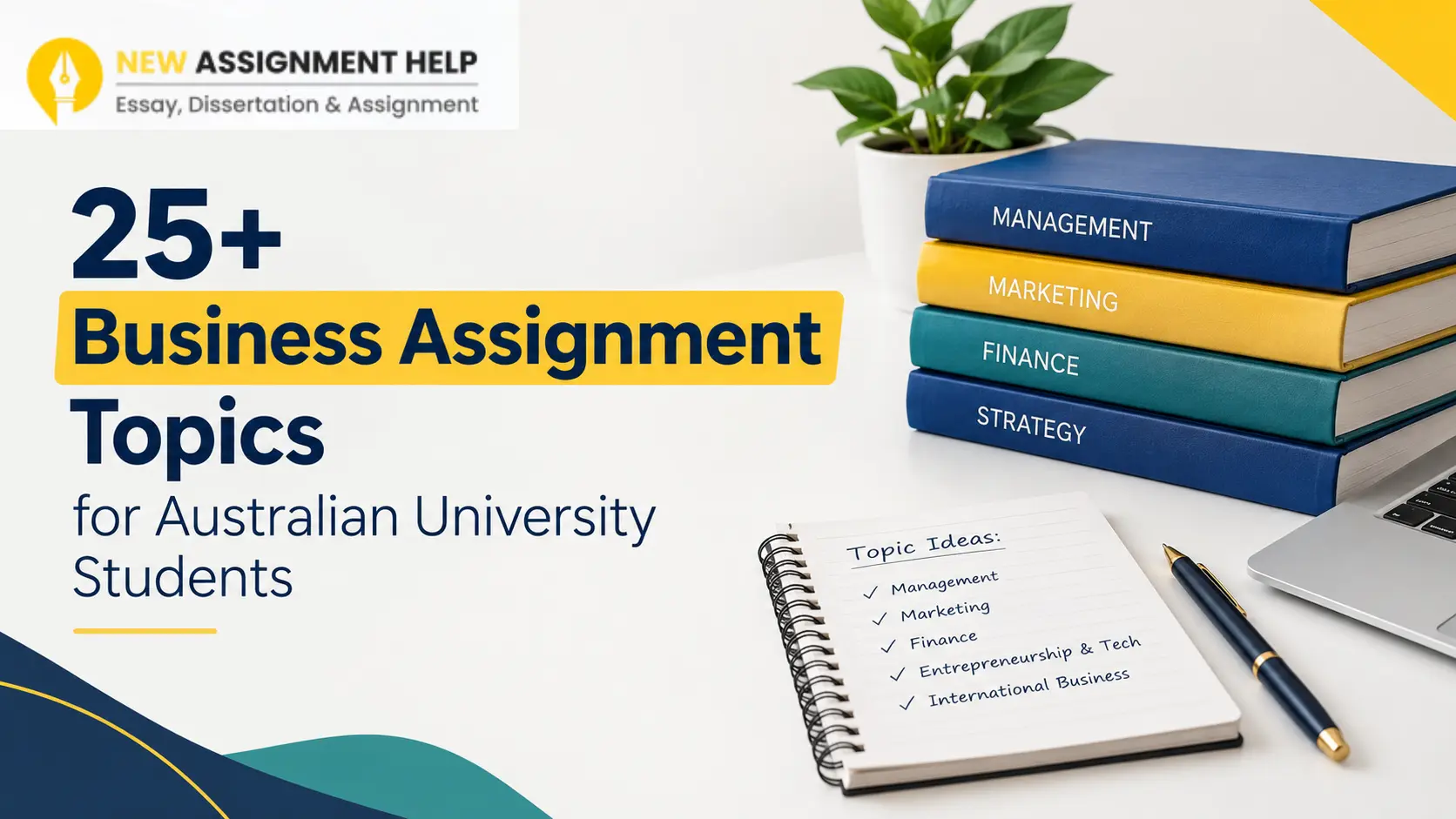
Your morning coffee, your phone plan and your weekly rent all come from business decisions. Business is everywhere, so topic ideas should be easy to find, right? But sadly, the case is often reversed. With so many options available, choosing the best business assignment topic becomes difficult. If you choose an idea that’s too broad or something that has very few sources to back it up, your assignment may sink. To save you this struggle, we’ve brought you this guide with 25+ business assignment topics across five clear areas. It also shows you how to narrow one down to suit your outline.
Management and Leadership Topics
These ideas suit units like organisational behaviour and strategic management. They also work well for case studies. Each one connects to real workplaces you can research.
- How hybrid work affects team trust in Australian companies
- Leadership styles in the Australian mining sector
- Change management lessons from a major bank restructure
- How the Fair Work Act shapes workplace culture
- Employee burnout and psychosocial safety rules at work
- Diversity and inclusion targets in ASX 200 boards
Annual reports, news coverage and government data can support all six. Once you have a management angle, you might prefer something more consumer-focused.
Marketing Topics
Marketing topics let you use current examples. Brands change fast, so your evidence can feel fresh. Pick a company you already know to save research time.
- Social media influencers and Gen Z buying habits
- Greenwashing claims and ACCC scrutiny of sustainability branding
- Buy now, pay later services and consumer spending
- How loyalty programs like Flybuys build repeat purchases
- Brand storytelling in Australian tourism campaigns
- Private label products and supermarket competition in Australia
Each topic gives you a theory to apply and a brand to test it on. Numbers matter just as much as brands in many units. That brings us to finance and accounting.
Finance and Accounting Topics
These topics suit students who like data. They often need ratios, trends or regulation. Use company filings from the ASX to ground your points here.
- How interest rate changes affect small business borrowing
- Mandatory climate reporting rules for large Australian companies
- Financial ratio comparison of two ASX-listed retailers
- Cryptocurrency regulation in Australia
- Superannuation funds and their role in corporate investment
- Audit quality and corporate collapses in Australia
Pick a topic where you can access the data early because waiting for numbers can slow the whole task. If finance feels too heavy, you can look at technology and enterprise instead.
Entrepreneurship and Technology Topics
This area grows quickly, so sources update often. So, it usually suits students who enjoy exploring new ideas. Many lecturers like fresh angles here.
- How AI tools change daily tasks in small businesses
- The gig economy and worker rights in Australia
- Start-up funding options for Australian founders
- Cybersecurity risks facing small and medium businesses
- Social enterprises and their impact on local communities
- E-commerce growth and the future of Australian high streets
These topics reward original thinking and careful source checking, because old articles date quickly. Some students prefer a wider lens, so the next area looks beyond Australian borders.
International Business and Operations Topics
These topics connect global trade with how companies run day to day. They suit units on supply chains, operations and global strategy, with government trade reports providing you with reliable data.
- Supply chain disruption and its effect on Australian retailers
- Australia’s trade relationship with China and its business risks
- How free trade agreements shape export decisions
- Lean operations in Australian manufacturing firms
- Foreign market entry strategies for Australian start-ups
Each idea lets you compare theory with real trade data. Now that you have plenty of options, the next step is to understand what makes them work.
What Makes a Business Topic Work
Everything starts with your unit outline. Check the learning outcomes and the marking rubric to make sure that your topic matches with what the marker wants to see. Then think about word count. A 1,500-word report needs a narrow focus whereas a 3,000-word essay can cover more ground.
Good topics share three traits:
- Enough credible sources
- Evokes at least some interest in the subject
- Lets you take a clear position and defend it.
“Marketing” is far too wide. “How Woolworths uses loyalty data to shape pricing” is much easier to argue. With that in mind, here is how to transform your chosen topic into a workable assignment.
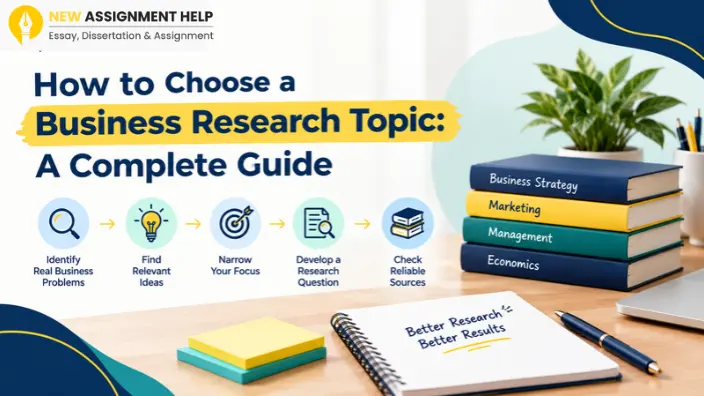
How to Narrow Your Topic
Take one idea from the above list of business assignment topics and add three limits. Choose a place, a time frame and a specific business. For example, “social media marketing” can become “TikTok marketing by Australian fashion brands since 2022”.
Next, turn the topic into a question. Questions give your essay direction. “Does influencer marketing increase trust among Gen Z shoppers?” is easier to answer than a broad theme. Lastly, run a quick search before you commit. Look for at least five solid sources, such as journal articles, industry reports and government pages. If you find fewer, adjust the scope.
Final Thoughts
The best business assignment topic is one you can research, narrow and argue within your word limit. Start with your rubric, choose an area that suits your strengths, and add clear limits. If you need extra direction while shaping your argument, business assignment writing support is available online. Pick one idea from this list today and test it with a five-source search.