1.0 Introduction and background overview
Concrete pavements, often called rigid pavements, prized for their strength and longevity. They carry heavy loads, resist rutting, and when properly built, last for decades. However, despite their robustness, they have their share of problems. Cracking happens due to temperature changes, shrinkage, heavy traffic, or supporting soil (subgrade) failures. One especially serious issue is when there is a void or sinkhole beneath the concrete. Without good support underneath, slabs settle, crack, or even collapse locally, which is costly and dangerous.
Traditional ways to repair rigid pavements routing and sealing, epoxy injection, patching, and overlaying, can help. However, they have limitations. Many fixes do not restore full strength, cracks may reopen, and sealing often fails when moisture or traffic gets underneath. They also require frequent maintenance and are sometimes expensive and labor-intensive. A study developed by Su et al. (2020) shows that Bacillus subtilis is especially useful due to its resistance in alkaline conditions and the formation of endospores, which stay alive within cementitious materials. In another study developed by Ahmad et al. (2024), Bacillus subtilis immobilised in polymer-covered lightweight expanded clay aggregates used to measure self-healing in bacterial concrete. They were able to recover a lot in mechanical performance and crack closure.
That is where biological self-healing, especially microbially induced calcium carbonate precipitation (MICP), and comes in. Bacteria like Bacillus subtilis can precipitate calcium carbonate in cracks, acting like nature’s own repair crew (as influenced by Saridhe and Selvaraj, 2020). Studies show that with MICP, concrete has lower water absorption, better crack-healing, and sometimes improved strength (Yamasamit et al., 2023).
However, very few experimental studies look at real rigid pavement slabs over voids or sinkholes.
- How does healing work when part of the slab is unsupported?
- How much strength returns?
This project addresses that gap.
2.0 Objectives & hypotheses
Research Aims
This research aims to evaluate bacterial performance in improving the strength and self-healing of rigid concrete pavements through MICP under normal and void (sinkhole) conditions.
Objectives
- To design concrete mixes incorporating bacterial spores directly and via encapsulation.
- To compare mechanical performance (compressive and flexural strength) between MICP-treated and control specimens.
- To evaluate the self-healing ability of cracks under controlled curing cycles with nutrient solutions.
- To assess the feasibility of applying MICP to rigid pavement structures with relevance to sinkhole/void conditions.
Hypotheses
- H1: Concrete mixes containing Bacillus subtilis will achieve equal or greater compressive and flexural strength compared to control mixes at 28 days.
- H2: MICP-treated specimens will demonstrate significant crack-healing ability, with measurable recovery in stiffness, permeability, and ultrasonic pulse velocity.
3.0 Materials & mix design
Cement, Aggregates, and Water
For this study, ordinary Portland cement (OPC) will be used as the main binding material. OPC is widely available and gives reliable strength development, which makes it a good choice for rigid pavement work (Khan et al., 2025). The fine aggregates will be clean river sand, passing through a 4.75 mm sieve. Coarse aggregates will be crushed stone with a maximum size of 20 mm. As suggested by Mustafa Ulaş et al. (2017), well-graded aggregates must be used as this will provide strength and reduce voidity in the concrete mix. Regular tap water will be used to mix and cure, as long as it is clean water, without contamination (i.e., oil or salt) that would be adverse to hydration and long-term quality performance.
Bacterial Strain
The chosen bacterial strain is the 'Bacillus subtilis'. It is a non-pathogenic bacterium and it has used in many previous studies into bacterial concrete (as noted by Ikram et al., 2022). The primary reason for its choice is its survival in alkaline conditions like concrete, and its ability to produce calcium carbonate crystals through microbial activity. The effects of the crystals are to fill cracks and pores to provide density and strength.
Nutrient Medium
For the bacteria to survive and work inside the concrete, a nutrient medium needed. As observed by Abo Sabah et al. (2021), calcium lactate will used as the main nutrient source because it provides both food for the bacteria and the calcium needed for calcite precipitation. In some trials, urea also used with a calcium source because this has been shown to increase microbial activity. The idea is to allow the bacteria to remain viable until cracks are formed, and then to initiate the calcite formation process to fill the cracks.
Mix Proportions
Two sets of mixes will be prepared:
- Control mix: Conventional concrete with no bacteria or nutrients.
- Bacterial mix: Same concrete mix but with Bacillus subtilis spores and calcium lactate added.
The water–cement ratio will be kept around 0.45–0.50, which is suitable for pavement-grade concrete. A simple table will show the exact proportions of cement, sand, aggregates, water, bacteria, and nutrients for both control and bacterial mixes.
Workability Tests
Before casting, the fresh concrete will be tested for workability. A slump test will be carried out to check consistency, and a compaction factor test will be done to confirm how well the concrete can be compacted (Jaleel Naji et al., 2019). This ensures that both mixes, controls, and bacteria can be compared fairly.
Casting and Curing
The concrete will cast in standard molds for cubes, cylinders, beams, and pavement slab specimens. The control specimens will cured in normal water tanks. The bacterial specimens will be cultured in water containing nutrients, so the bacteria remain active and ready for healing (as influenced by Syed et al., 2022). All curing will done under controlled conditions to make results reliable.
4.0 Experimental program
4.1 Specimen Details
Strength, durability and healing performance of bacterial and normal concrete The various types of the specimen will be prepared to test the strength, durability and healing performance of bacterial concrete against normal concrete. The choice of each type determines a certain property to be studied as table below illustrates
| Specimen Type | Size (mm) | Property Tested | Purpose |
| Cube | 150 × 150 × 150 | Compressive strength, water absorption | To check the overall strength and durability of the mix. |
| Cylinder | 100 × 200 or 150 × 300 | Split tensile strength | To measure how well the concrete resists cracking under indirect tensile load. |
| Beam | 100 × 100 × 500 | Flexural strength, crack initiation | To study bending behaviour and observe how cracks st |
Table 1: Specimen Details
The utilisation of these specimens gives us a very clear picture of the performance of bacterial concrete. Cubes provide the compressive strength and water resistance data. Tensile resistance is exhibited by cylinders and this is significant in crack prevention. Flexural strength testing and crack growth control Testing of flexural strength can also be performed using beams. Pavement slabs are the most important since they give conditions in real fields and how cracks act and mend when the slab is laid over some solid ground or a void.
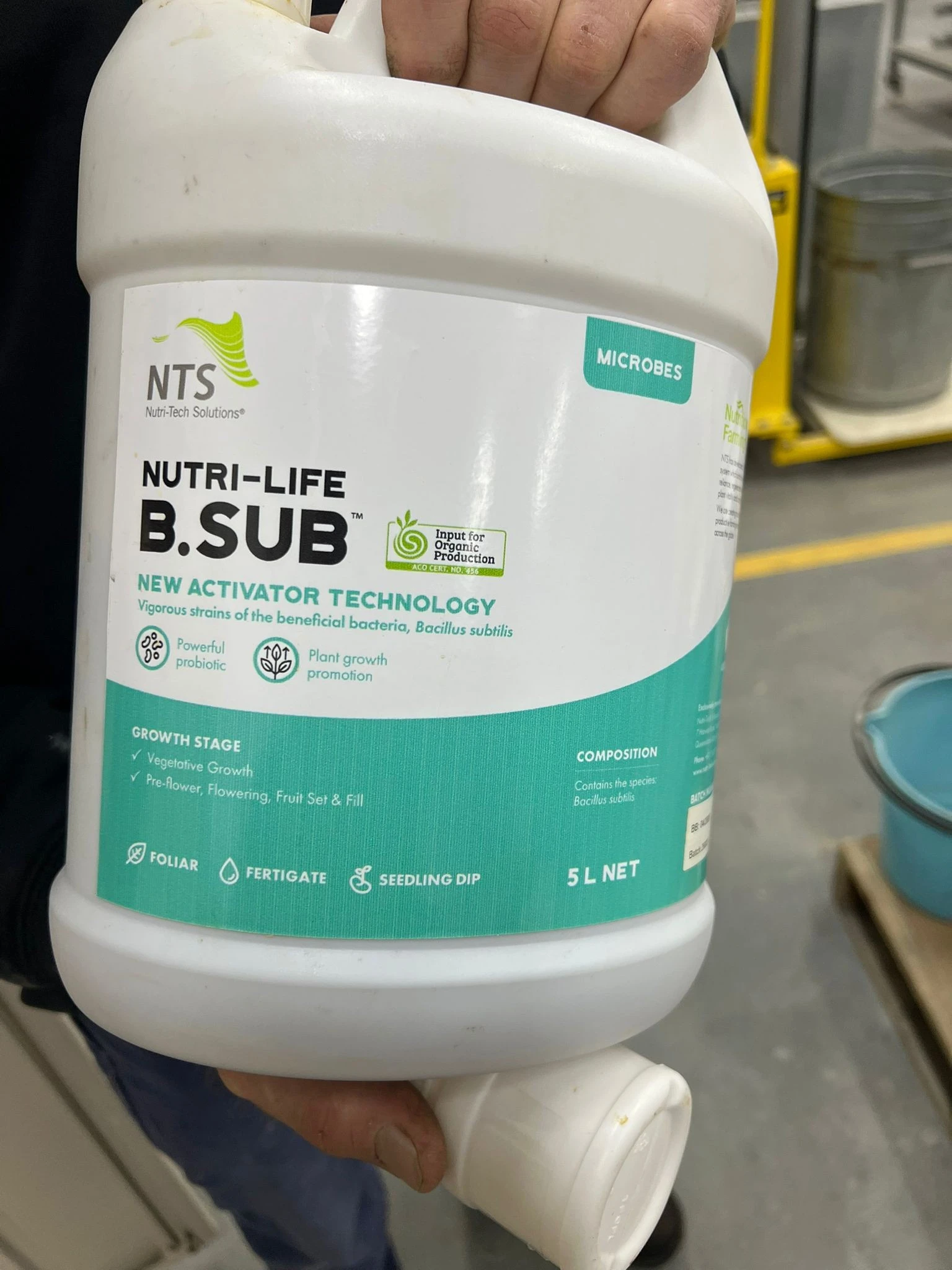
Figure 1: Bacillus subtilis bacteria solution
Past research, including Coni et al. (2023) indicate that slab preparation by means of engineered voids can be a good predictor of the actual pavement failures due to subgrade issues such as sinkholes. By so doing, Oxford material foundation capabilities as well as the default behaviour of bacterial and control concretes are comparisonable.
4.2 Sinkhole/void setup
To simulate a sinkhole or void, a subgrade support model will be constructed with compacted base and edge support. A removable insert, such as a plastic or foam block, will be placed under the slab during casting to form the cavity (Breseghello et al., 2024). Once the concrete has gained strength, the insert will be removed, leaving behind a circular void of about 200 mm diameter and 100–150 mm depth. This creates conditions similar to a pavement slab bridging over a sinkhole.
4.3 Crack Induction Method
Crack induction will be carried out in a controlled manner. For beams and slabs, pre-loading will be applied until a target crack width is reached, or a notch or saw cut may be introduced at mid-span to control the crack location. Once cracks form, they will be carefully monitored using a handheld crack microscope and supported by digital imaging methods, which provide reliable measurements of crack width over time. This approach ensures that crack development is consistent and measurable, making it possible to track the effectiveness of bacterial healing in both standard specimens and larger pavement slabs under void conditions.
5.0 Testing Methods
The testing program combine standard strength tests, durability checks, and advanced monitoring techniques. Compressive strength will measured on cubes following ASTM C39, while split tensile strength on cylinders will follow ASTM C496. Flexural strength of beams and slabs will be tested in line with ASTM C78. Durability will assessed through water absorption (ASTM C642), permeability, and chloride penetration tests to study resistance against aggressive agents (as influenced by Valenzuela-Leyva et al., 2025). Non-destructive tests such as Ultrasonic Pulse Velocity (UPV), rebound hammer, and deflection measurements will provide additional insight into concrete integrity. Crack healing will be tracked using image analysis at intervals of 7, 14, and 28 days to measure closure over time. The microstructural study, SEM and XRD will confirm calcium carbonate precipitation. Finally, slab-over-void specimens will undergo load–deflection testing to evaluate crack propagation and healing effectiveness.
6.0 Risk Management, Biosafety, and Quality Control
Working with concrete and bacterial solutions needs proper safety planning. The risks in this project are mostly chemical, physical, and biological. Chemicals such as calcium chloride and urea can irritate the skin and eyes, so gloves, goggles, and lab coats will be worn at all times (Nih.gov, 2021). Heavy equipment like mixers and testing machines can also cause accidents if used carelessly. To prevent this, only trained users will operate them, and emergency drills will be in place in case of spillages or equipment failure.
From a biosafety point of view, the use of Bacillus subtilis considered safe because it is a level-1 organism (Jörg Stülke et al., 2023). Still, the handling of cultures will follow strict hygiene rules. Benches will be disinfected before and after use, and hands will be washed carefully. Waste materials containing bacteria will be treated with disinfectants before disposal, and food or drinks will not be allowed in the lab. For quality control, all testing machines will be calibrated on schedule to ensure accurate readings. Multiple specimens will be cast to reduce variability, and curing conditions will be checked daily (Su et al., 2020). Workability tests, such as the slump test, will confirm uniformity across mixes. Every result will be logged immediately, and photos will be taken to document key stages like cracking and healing. This careful approach will keep the study safe, reliable, and transparent.
7.0 Trimester Work Plan
| Week | Activity | Details / Expected Output |
| Week 1–2 | Literature review and procurement | Collect and review key studies on MICP and rigid pavements; prepare short review notes. Procure materials such as cement, aggregates, molds, bacterial culture, and nutrient chemicals. |
| Week 3 | Trial mixes and bacterial culture check | Prepare small test batches to check workability. Test bacterial survival after mixing and confirm culture viability. |
| Week 4 | Casting specimens | Cast cubes, cylinders, beams, and slab specimens (control and bacterial). Record mix proportions and curing details. |
| Week 5–6 | Crack induction and healing setup | Apply pre-loading or notches to introduce cracks in beams and slabs. Begin the healing process using nutrient curing and record initial crack widths. |
| Week 7 | Seven-day tests and crack monitoring | Conduct compressive, tensile, and flexural strength tests at 7 days. Record crack images and measure widths for comparison. |
| Week 8 | Interim progress report | Compile initial results, specimen photos, and observations. Submit a progress report with a discussion of early findings. |
| Week 9–10 | Twenty-eight-day mechanical tests | Carry out and durability tests on 28-day specimens. Compare control and bacterial mixes. |
| Week 11 | Microstructural analysis | Use SEM and XRD to confirm calcium carbonate formation in healed cracks. Document results with images and notes. |
| Week 12 | Data analysis and submission | Analyse results, prepare graphs and tables, and complete the trimester report submission. |
Table 2: Trimester Work Plan (Progress Plan)
(Source: Created by author)
The trimester plan follows a clear sequence from preparation to final reporting. The first weeks focus on literature review, material procurement, and trial mixes to check bacterial viability. Specimens cast in Week 4, followed by controlled crack induction and healing setup in Weeks 5–6. Early progress tracked through seven-day strength tests and crack monitoring in Week 7, leading to an interim progress report in Week 8. The latter phase includes 28-day strength and durability tests, microstructural analysis using SEM/XRD, and finally, data analysis and report submission. This stepwise approach ensures steady progress and reliable results within the term.
References
- Abo Sabah, S.H., Anneza, L.H., Juki, M.I., Alabduljabbar, H., Othman, N., Al-Gheethi, A.A. and Al-Shalif, A.F. (2021). The Use of Calcium Lactate to Enhance the Durability and Engineering Properties of Bioconcrete. Sustainability, 13(16), p.9269. doi:https://doi.org/10.3390/su13169269.
- Ahmad, I., Shokouhian, M., Owolabi, D., Jenkins, M. and McLemore, G.L. (2025). Assessment of Biogenic Healing Capability, Mechanical Properties, and Freeze–Thaw Durability of Bacterial-Based Concrete Using Bacillus subtilis, Bacillus sphaericus, and Bacillus megaterium. Buildings, 15(6), p.943. doi:https://doi.org/10.3390/buildings15060943.
- Breseghello, L., Hajikarimian, H. and Naboni, R. (2024). 3DLightSlab. Design to 3D concrete printing workflow for stress-driven ribbed slabs. Journal of Building Engineering, 91, p.109573. doi:https://doi.org/10.1016/j.jobe.2024.109573.
- Coni, M., Portas, S., Rombi, J. and Maltinti, F. (2023). The Effect of Subgrade Cavity on Pavement. A Case Study. Lecture Notes in Computer Science, [online] pp.244–259. doi:https://doi.org/10.1007/978-3-031-37126-4_17.
- Ikram, M., Naeem, M., Muhammad Zahoor, Marlia Mohd Hanafiah, Adeleke Abdulrahman Oyekanmi, Islam, N., Ullah, M., Mahnashi, M.H., Amer Al Ali, Jalal, N.A., Farkad Bantun, Momenah, A.M. and Sadiq, A. (2022). Bacillus subtilis: As an Efficient Bacterial Strain for the Reclamation of Water Loaded with Textile Azo Dye, Orange II. International Journal of Molecular Sciences, 23(18), pp.10637–10637. doi:https://doi.org/10.3390/ijms231810637.
- Jaleel Naji, A., Abbas Al-Yousefi, H., Abbas Mousa, M. and Jasim Hussein, M. (2019). Optimization of water-cement ratio in concrete contains recycled polypropylene (PP) plastic waste. Periodicals of Engineering and Natural Sciences (PEN), 7(4), p.1563. doi:https://doi.org/10.21533/pen.v7i4.834.
- Jörg Stülke, Grüppen, A., Bramkamp, M. and Pelzer, S. (2023). Bacillus subtilis, a Swiss Army Knife in Science and Biotechnology. Journal of Bacteriology, [online] 205(5). doi:https://doi.org/10.1128/jb.00102-23.
- Khan, M.S., Khan, M.S., Khan, M.I., Al-Nawasir, R., Maureira-Carsalade, N., Avudaiappan, S. and Choudhry, R.M. (2025). Enhancing rigid pavement performance: Experimental study and design optimization of bentonite clay-blended concrete with a focus on durability. Case Studies in Construction Materials, 22, p.e04641. doi:https://doi.org/10.1016/j.cscm.2025.e04641.
- Mustafa Ulaş, Kürşat Esat Alyamaç and Zülfü Çınar Ulucan (2017). Effects of aggregate grading on the properties of steel fibre-reinforced concrete. IOP conference series, 246, pp.012015–012015. doi:https://doi.org/10.1088/1757-899x/246/1/012015.
- National Library of Medicine (2021). Working with Chemicals. [online] Nih.gov. Available at: https://www.ncbi.nlm.nih.gov/books/NBK55872/.
- Saridhe, S.P. and Selvaraj, T. (2020). Microbial precipitation of calcium carbonate in cementitious materials – A critical review. Materials Today: Proceedings. doi:https://doi.org/10.1016/j.matpr.2020.08.762.
- Su, Y., Liu, C., Fang, H. and Zhang, D. (2020). Bacillus subtilis: A universal cell factory for industry, agriculture, biomaterials and medicine. Microbial Cell Factories, [online] 19. doi:https://doi.org/10.1186/s12934-020-01436-8.
- Su, Y., Liu, C., Fang, H. and Zhang, D. (2020). Bacillus subtilis: A universal cell factory for industry, agriculture, biomaterials and medicine. Microbial Cell Factories, [online] 19(173). doi:https://doi.org/10.1186/s12934-020-01436-8.
- Syed, Muhammad Imran Khan, Shabir Hussain Khahro, Zaid, O., Siddique, M. and Nur (2022). Prediction of Strength Properties of Concrete Containing Waste Marble Aggregate and Stone Dust—Modeling and Optimization Using RSM. Materials, 15(22), pp.8024–8024. doi:https://doi.org/10.3390/ma15228024.
- Valenzuela-Leyva, C.K., Soto-Felix, M., Gaxiola-Camacho, J.R., Ojeda-Farias, O.F., Herrera-Ramirez, J.M. and Carreño-Gallardo, C. (2025). Improving Durability and Compressive Strength of Concrete with Rhyolite Aggregates and Recycled Supplementary Cementitious Materials. Buildings, [online] 15(13), pp.2257–2257. doi:https://doi.org/10.3390/buildings15132257.
- Yamasamit, N., Sangkeaw, P., Jitchaijaroen, W., Thongchom, C., Keawsawasvong, S. and Kamchoom, V. (2023). Effect of Bacillus subtilis on mechanical and self-healing properties in mortar with different crack widths and curing conditions. Scientific Reports, [online] 13(1), p.7844. doi:https://doi.org/10.1038/s41598-023-34837-x.