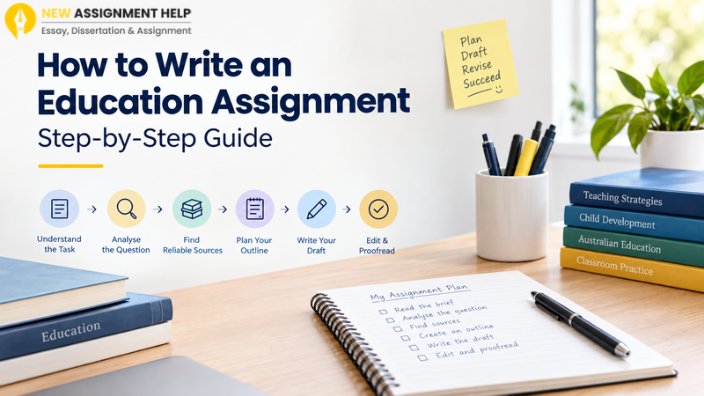
Education assignments ask you to link theory to real classrooms. That can feel tricky when you are new to teacher education. But if you have a clear process in front of you, it makes the task easier. In this guide, we’ll learn how to write an education assignment from reading the brief to the final edit. How about building a map that can be used every time you approach your education assignment? Let’s start by understanding the task itself.
Step 1: Identify the Type of Educational Assignment Task
Education units use many formats. You might get a lesson plan, a reflective journal, a case study, or a critical essay. Each one follows different rules. For example, a lesson plan needs clear learning goals and activities, whereas a reflection needs your own voice and evidence from placement. When working on essays, you might need a strong argument. Therefore, always be twice sure about what your task is asking of you.
Also check your unit outline for the word count, due date, and marking rubric. Write these on a sticky note and keep it near your laptop. Once you know the task type, you can read the question more closely.
Step 2: Break Down the Education Question
While reading the brief, keep underlining the task words like “analyse”, “evaluate”, and “discuss”. This is important because each of these asks for different things. “Describe” needs facts and “Evaluate” needs a judgement backed by evidence.
Then move on to the rubric. Many Australian education units link to the Australian Professional Standards for Teachers, set by AITSL. Your task may ask you to address a particular standard. If so, name it in your plan. Finally, circle the topic words as these become your search terms. With the question clear, your next step is to find sources.
Step 3: Find Strong, Relevant Sources
A good education assignment is one that is backed by current research and local context. To do so, start with your unit readings. Then search your university library database and Google Scholar. Aim for sources from the last ten years unless the theory is a classic. Piaget, Vygotsky, and Bandura are good examples to start with. Save each reference detail straight away to save stress later. The table below shows where to look and what each source offers.
| Source | Best for |
|---|---|
| University library database | Peer-reviewed journal articles |
| ACARA website | Australian Curriculum content |
| AITSL website | Teaching standards and frameworks |
| State education department | Policy and school guidelines |
Mixing these sources shows your marker that you understand both theory and practice. Once your notes are ready, you can build a plan.
Step 4: Build a Simple Education Assignment Outline
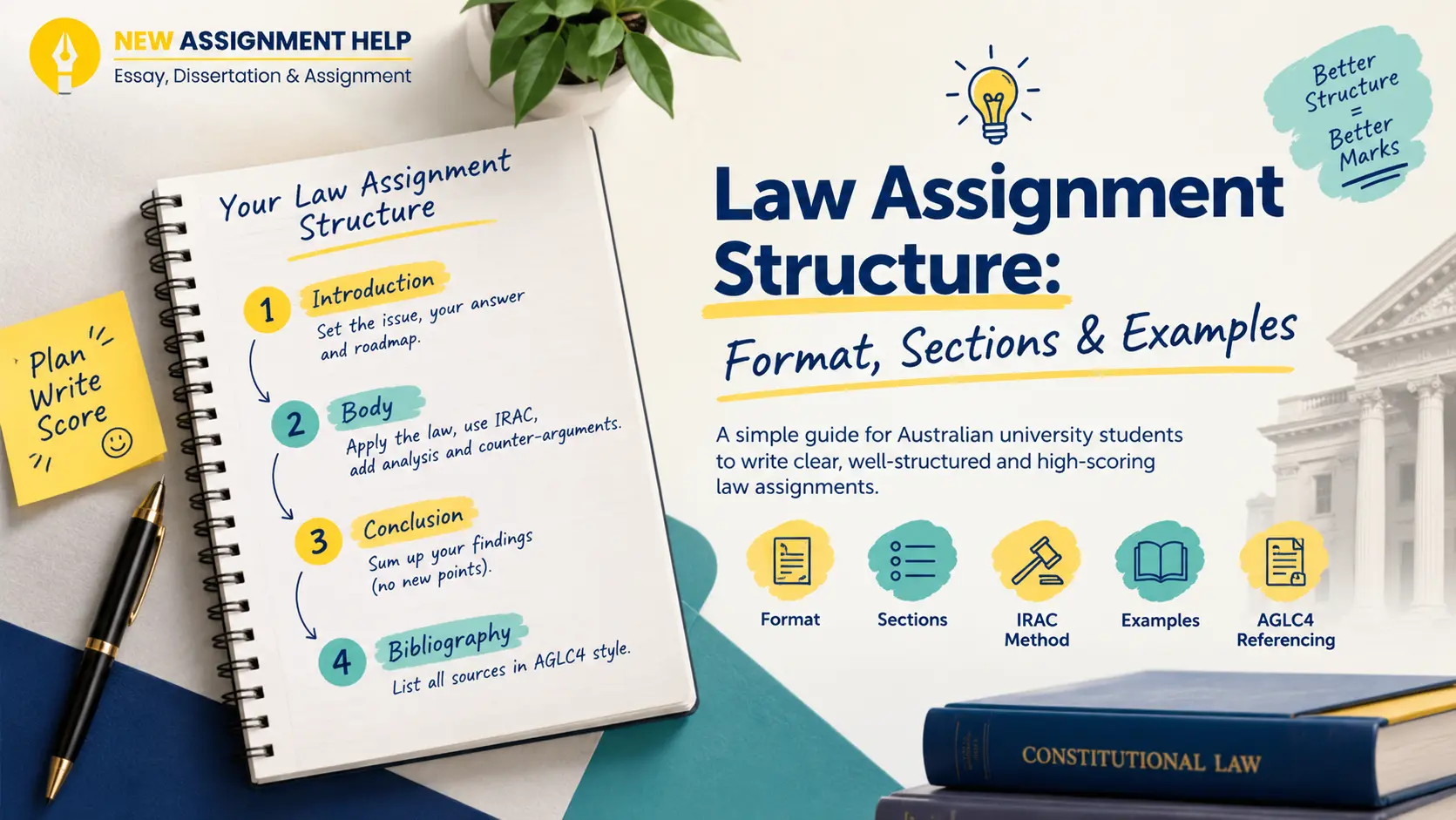
Always make an outline before you proceed with the written draft. This step keeps your ideas in order and gives your paragraph direction. If you’re not sure what to include, below is a basic workframe that suits most education essays.
- Introduction: state your position and preview your main points.
- Body paragraph one: present your first idea with a theory and an example.
- Body paragraph two: add a second idea linked to classroom practice.
- Body paragraph three: include a limitation or a different view.
- Conclusion: sum up your argument and what it means for teaching.
Once your outline is ready, adjust the number of paragraphs to fit your word count. A 1,500 word essay usually needs three or four body paragraphs and so on. It’s now time to build our first draft.
Step 5: Write the First Assignment Draft
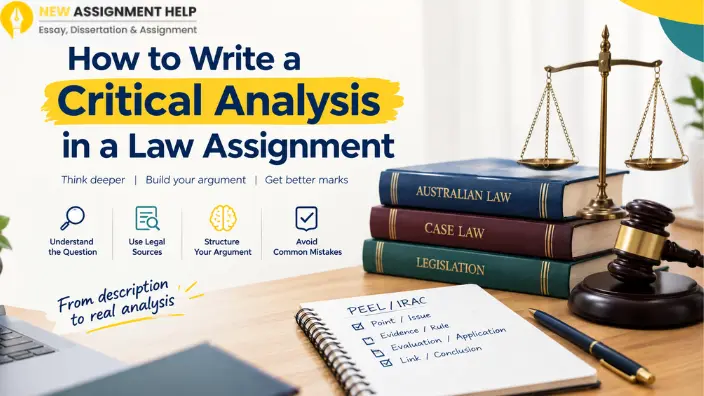
If you feel stuck, start with the body because many students find the introduction easier once the argument is clear. For each paragraph, try the PEEL method. Make a point, add evidence, explain it, then link back to the question.
Do not forget to connect theory to practice. If you cite Vygotsky, explain how scaffolding might look in a Year 3 maths lesson because markers reward such links. Use first person only when the task allows it, such as in a reflection.
Always keep your sentences short and your tone formal and clear. Also try to write freely, if some errors occur, fix them later. If your deadline allows, step away from your draft for a day before you move on to editing.
Step 6: Reference, Edit and Proofread
When doing the referencing, check your unit guide first. Although most Australian universities use the APA 7th edition for education units, but cross-checking your unit’s specific requirements is always a better idea. Keep adding in-text citations as you write and build your reference list at the end, and match every citation to a full entry.
Next, edit in rounds. First, check your argument against the question. Then, check structure and flow. Last, check grammar and spelling. Reading aloud catches clunky lines quickly and compare your work to the rubric one last time to catch any avoidable mistakes.
Final Thoughts
Writing an education assignment gets easier when you follow clear steps. A good assignment writing workflow looks something like this: Read the brief, break down the question, gather sound sources, plan, draft, and edit. Each stage builds on the one before it. If you want extra direction along the way, education writing support from your university learning centre or a trusted academic service can offer a second view. Start early and leave time to revise.