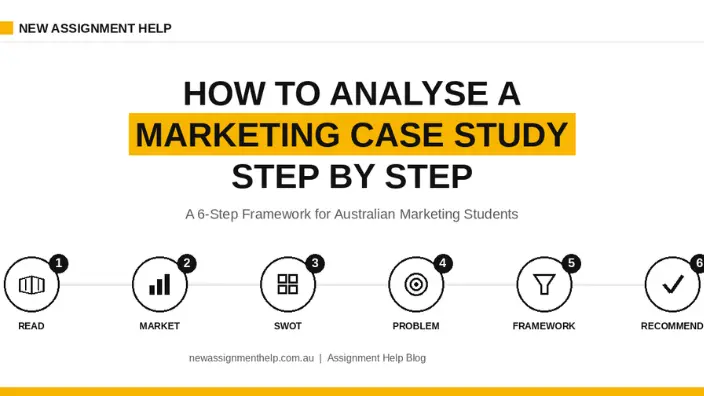
To analyse a marketing case study, read it closely, name the core problem, then compare options using marketing frameworks before picking one clear recommendation. This method works for almost every marketing subject at Australian universities. They ask you to read a real or realistic situation and work out what a company should do next. Many students freeze up when they see a long case study for the first time. The good news is that analysing one gets much easier once you follow a clear process. Below is a closer look at each step to ease your next marketing case study analysis.
Step 1: Read the Case Study More Than Once
Your first read should just be about getting the full picture. Do not try to solve anything yet. Simply notice the company, its products, and the market it works in.
Your second read is where the real work starts. Underline numbers, dates, and any comments from managers or customers. These small details often hold the answer to the main problem. A quick skim will not give you enough to work with later. Therefore, reading your case study twice is an essential step here. Once you understand the situation, you are ready to dig into the details that shape it.
Step 2: Study the Market and Competitors
Your next step is understanding the “what” behind the case study. At this point, you need to look at what is happening around the company, like:
- Who are the main competitors, and what makes them strong or weak?
- What does the audience want and how are other competitors offering?
- Is the market growing, shrinking, or staying flat for the entire niche?
- What trends or rules are shaping buyer behaviour right now?
When you have these data, you get a realistic view of the overall business scenario. This way, you get to take your analysis in the right direction. With that context set, you can now turn inward and look at the company itself.
Step 3: Break Down the Company's Position
This step can be understood as a SWOT analysis where you look at the company's strengths, weaknesses, opportunities, and threats.
To analyse strengths and weaknesses, look at the brand, its resources, and its past decisions. For opportunities and threats, analyse where the company is lacking in competition. This includes new technology, changing laws, or shifts in customers’ expectations. With these sorted, you’ll have a better and clearer internal view of the situation. Next, you need to pin down the actual problem the company is facing.
Step 4: Identify the Core Problem
This is the most important step in the whole process, where you look for the real problem that’s making the company struggle. Many students skip this part and end up with a weak analysis. But you should not.
Look for the difference between a symptom and the real problem. Falling sales are a symptom. Poor targeting or an outdated product might be the actual problem behind it. Pick one clear issue and explain why it matters using the appropriate marketing technique.
Step 5: Apply a Marketing Framework
A framework gives your analysis structure instead of a random list of points. Pick the one that fits the case perfectly and use it to solve it.
- Use PESTLE when the case involves outside forces like economic shifts or new regulations.
- Use the 4Ps when the issue centres on product, price, place, or promotion.
- Use Porter's Five Forces when competition and industry pressure drive the story.
- Use the Ansoff Matrix when the company is weighing growth options like new markets or new products.
If you’re thinking about why to apply a framework, then the answer is clear. It turns your earlier notes into a proper analysis and gives your core problem a shape. It also shows your marker that you understand how marketing theory connects to real situations. Now, after all the analysis, the last step is to suggest a solution.
Step 6: Make a Recommendation
Pick the option that best fits the company's goals and resources. State your choice clearly and back it up with reasons drawn from your earlier analysis. Try to avoid vague answers like "the company should improve marketing". This brings no specific next step. Instead, be specific about what action to take and why it beats the other options.
A strong recommendation also touches on how the company would put the idea into action. Even a short note about timing or resources adds credibility to your answer and shows your tutor that you’re ready to analyse real marketing scenarios.
Footnote
Analysing a marketing case study is like working through a logical sequence. You read closely, study the market, look inside the company, name the real problem, weigh your options, and land on one clear answer. Following these steps in order keeps your analysis structured and effective.
Once you get comfortable with this process, it starts to feel less like a puzzle and more like a routine. If you are still finding it tough to structure your analysis, then marketing assignment assistance can make the process a lot smoother. With the above step-by-step guide and a little support you can build up your confidence with case studies.