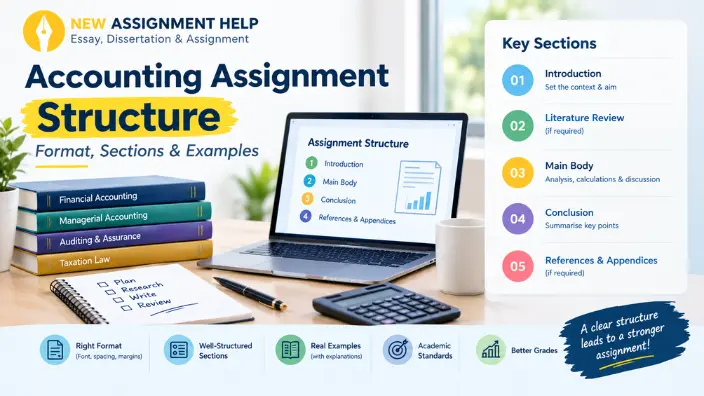
When numbers, theory and referencing start to pile up together, many Australian accounting students get stuck. They have no idea where to start, how to structure, what format to use and what it should look like. That’s when they start looking for “accounting assignment structure” on the internet. Just so you know, every accounting assignment follows a similar pattern once you know it.
This guide walks you through three things. First, the format rules Australian universities expect. Second, the sections every solid assignment needs. Third, a worked example that ties it all together. Once you understand the structure, our guide on how to write an accounting assignment can help you work through the actual writing process step by step. So that by the end, you are not left with any doubt.
The Most Acceptable Format For Your Accounting Assignment
Format is the first thing markers notice. Most Australian units ask for
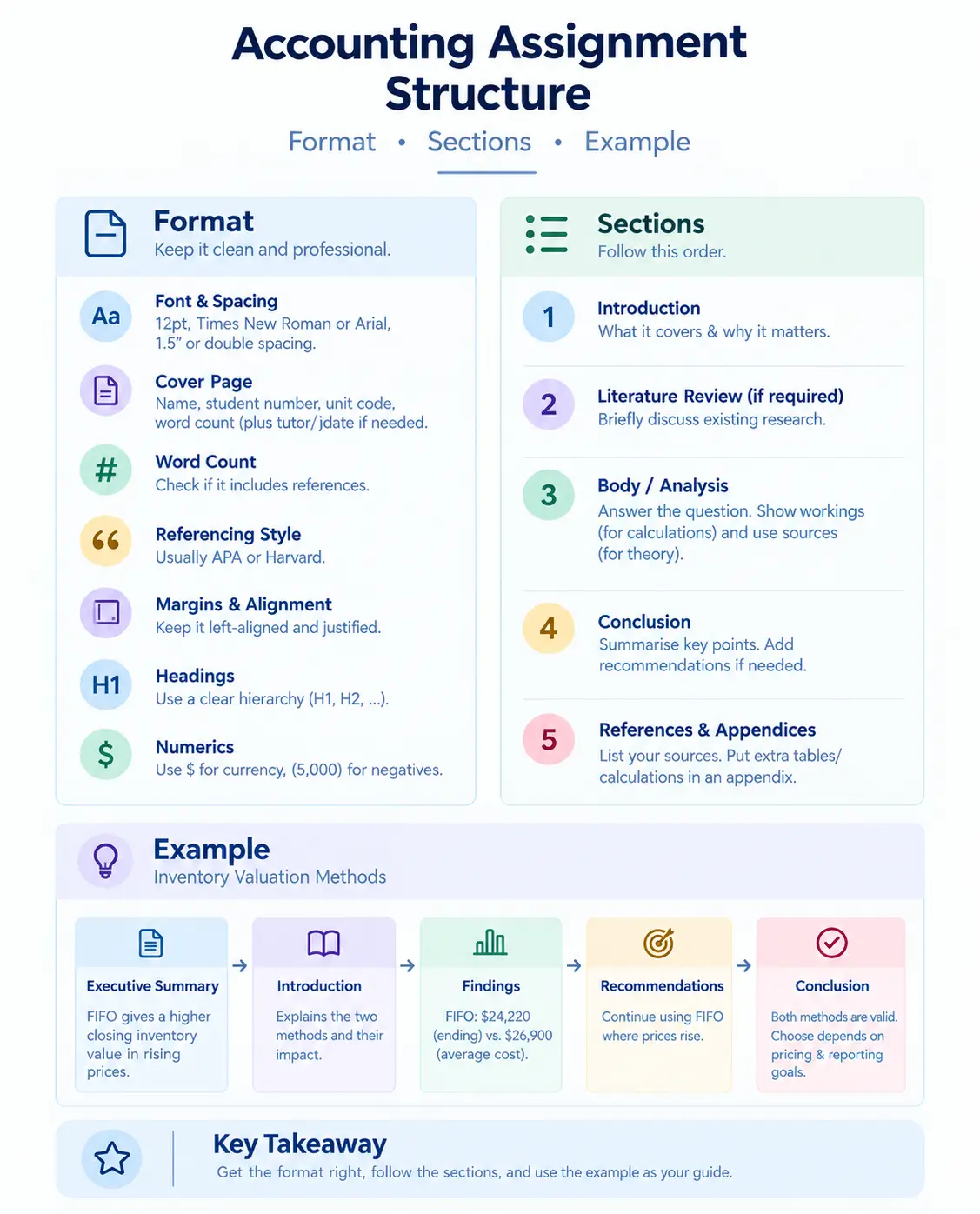
- Font and Spacing: 12-point font in Times New Roman or Arial, with line spacing usually set at 1.5 or double.
- Cover page: This usually includes your name, student number, unit code, and word count. Some units also want your tutor's name and the submission date. Check your unit outline for exact rules here.
- Word count limits: Some units count only the body text, not the reference list. Going over or under the limit can affect your grade.
- Referencing style: Most Australian universities use APA or Harvard style, though this can vary between courses so again do check your unit outline.
- Margins: Always keep your work left-aligned and in justified text.
- Heading styles: Never skip hierarchy here. E.g., use Heading 1 for main sections and Heading 2 for subsections.
- Numerics: Currency figures must include the appropriate symbols. Negative values, such as (5,000), should be enclosed in parentheses rather than using the minus sign.
All these details may seem small, but they make your work look way neater and more professional. So never take them for granted. Now once your format is locked in, it is time to think beyond it.
Sections To Include In Your Accounting Assignment
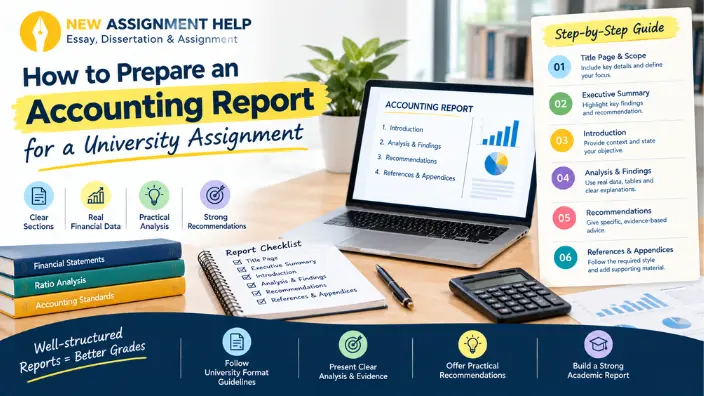
Every accounting assignment follows a similar shape. Knowing each section will let you plan your time and stay on track.
- Your introduction should be short and direct. Explain what the assignment covers and why it matters. State your approach in two or three sentences. Avoid restating the entire question word for word.
- Some assignments also need a short literature review before the main analysis. This section looks at existing research or theory related to your topic. Not every task needs this, so check your unit outline first.
- The body comes next, and this is where most of your marks come from. It usually contains subheadings that match each part of the question. For calculation-based tasks, this includes step-by-step workings. Markers award marks for the process, not only the answer. If your task includes theory, back up every claim with a source. Break long sections into smaller paragraphs as you write. This keeps your ideas easy to follow.
- Your conclusion should summarise the key points from your analysis. Do not introduce new information here. If the task asks for recommendations, keep them short and practical. Link your conclusion back to the original question.
- Finally, add your reference list. If you have long calculations or extra tables, place them in an appendix instead of the main body. Label each appendix clearly so the marker can find it.
When you follow these steps in the following order, you’ll end up writing an accounting assignment that speaks for itself. Lastly, let’s look at a quick example to make more sense of how to put all these together.
Accounting Assignment Example
Imagine your task is a short report on inventory valuation methods. Here is how each section might look in practice.
Executive Summary: This report compares the FIFO and weighted average methods for inventory valuation. It finds that FIFO gives a higher closing inventory value during periods of rising prices.
Introduction: This report examines two common inventory valuation methods used by Australian businesses. It explains how each method affects reported profit and asset value.
Findings: Using the company's sales data, the FIFO method produced a closing inventory value of $48,200. The weighted average method produced $45,900 for the same period. This difference also changes the reported cost of goods sold.
Recommendations: The company should continue using FIFO while prices keep rising. This method better reflects the current replacement value on the balance sheet.
Conclusion: Both methods are valid under Australian accounting standards. The right choice depends on the company's pricing environment and reporting goals.
You see how each section builds on the one before it? That’s what a good accounting assignment should look like.
One thing to keep in mind here is that no matter the assignment type, the idea remains the same. Headings might change, and stats might change but the core template remains the same. Reports use an executive summary and findings, while essays lean more on paragraphs than labelled sections. Keep your headings consistent with what your unit outline asks for, since some lecturers have their own preferred labels.
Conclusion
A good accounting assignment is the one that is easy to follow for both your professor and you. To get the best of it, the simplest way is to stick to a good structure. First thing first, get the format right, then work through each section in order. Use the above example as your guide whenever you feel stuck.
Once you get comfortable with this approach, future assignments become quicker to plan. Eventually, you will spend less time worrying about layout and more time on your actual analysis. Some students also look for accounting writing support along the way to make busy semesters feel a little less overwhelming.

 9 Years | Master of Accounting