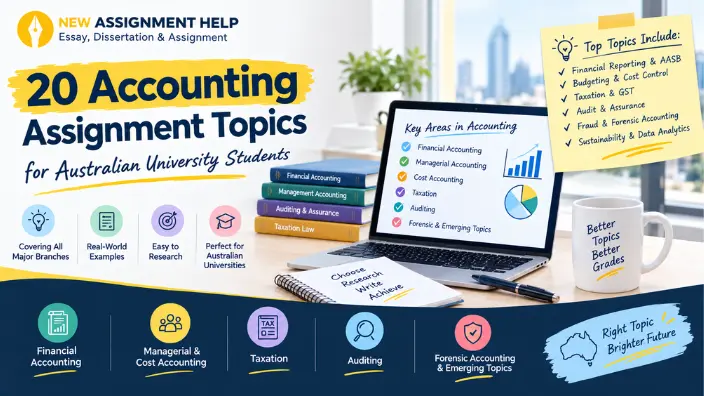
If you’re one of those Australian students who think picking a topic is the hardest part of an accounting assignment, then you’re not alone. Many students spend more time choosing a topic than actually writing about it. A good topic is the one that makes your research easier and keeps your report focused. But the question is: where to find the right one? Well, no need to look for it any further. In here, you’ll get 20 accounting topics across the main branches of accounting that you can start with right away. If you stay with us till the end, you’ll also get tips on how to narrow them down for your specific unit. Sounds good? Let’s begin by understanding why it matters so much in the first place.
Why Your Topic Choice Matters
Since accounting units at Australian universities have different subject areas, choosing a topic that fits your specific unit becomes important. Australian accounting includes financial accounting, managerial accounting, cost accounting, taxation, and auditing. Each area has its own style of thinking. Where financial accounting focuses on reporting rules, managerial accounting looks at internal decisions. Because of this difference, picking a topic from the right area keeps your work aligned with your unit outline.
However, always check your assignment brief beforehand because many lecturers list a preferred theme or case study type. This small step saves you from choosing a topic that drifts away from the marking rubric. Once your area is clear, you can start narrowing down your focus.
Financial Accounting Topics
Financial accounting deals with how companies record and report their transactions. Therefore, the topics here often deal with real Australian transaction reporting standards. The topics you can work on are:
- The role of AASB standards in financial statement preparation
- Revenue recognition under AASB 15 for service businesses
- Comparing depreciation methods and their effect on reported profit
- How lease accounting changed under AASB 16
- The impact of fair value measurement on asset reporting
These topics work well because they combine theory with real company examples. You can pull annual reports from ASX-listed companies to support your analysis here. For a deeper understanding of the relevant standards, this AASB standards guide can help you identify which requirements to consider. This gives your assignment a practical edge, which lecturers usually reward.
Managerial and Cost Accounting Topics
Managerial and cost accounting is all about how businesses plan budgets, control costs, and make decisions using financial data. Students who enjoy practical problem-solving over theoretical reporting rules prefer this unit. When you need to submit an assignment, you choose the topic from the following:
- Budgeting techniques used by small Australian businesses
- Activity based costing versus traditional costing methods
- Break even analysis for a retail or hospitality business
- Variance analysis and its use in performance reviews
- Cost volume profit analysis for pricing decisions
Pair these topics with local business examples and you’re good to go. A cafe or small retailer may give you a manageable case study to keep your assignment grounded and realistic.
Taxation and Auditing Accounting Topics
These topics are comparatively popular because they connect accounting directly to Australian law. However, students often find these subjects a little tricky, but when you have a clearly framed topic to choose from, the research process becomes smoother.
- GST rules and how they apply to small businesses
- Tax implications of different business structures in Australia
- The role of the Australian Taxation Office in compliance checks
- Auditor independence and its importance in financial reporting
- Common audit risks in the retail sector
The topics you see above can very well be paired with case studies from real regulatory guidance. If you find the basics of these to be a little tough, you can always look up at the ATO website for easy reference. This will make your research faster and your arguments clearer.
Forensic and Emerging Accounting Topics
Forensic accounting and technology-driven topics are gaining attention in Australian courses lately. These are best for those students who want a slightly different angle from traditional reporting essays. You can choose your topic of interest from the following:
- Detecting fraud through financial statement red flags
- How data analytics is changing the audit process
- Sustainability reporting and its growing role in Australian companies
- Blockchain technology and its effect on transaction recording
- Ethical dilemmas accountants face in modern practice
These topics tend to stand out because fewer students choose them. They also connect accounting to current industry changes, which many lecturers like to see referenced. So, if you’re choosing one from here, know that you’re a step ahead of your peers.
Narrowing Down Your Final Topic
Having an accounting topic isn’t everything. Once you shortlist a topic, test each idea against three questions:
- Can I find enough academic sources?
- Does it match my word count?
- Does it fit the assessment criteria exactly?
A topic that ticks all three boxes will be far easier to write. If you need to turn a broad accounting idea into a focused research direction, research topic and research question examples can help you narrow your approach.
Tip: Write a one-line thesis statement before you start researching. If you're unsure how to frame it, this guide on how to write a thesis statement can help. This keeps your argument focused from the first paragraph to the last. From here, the actual writing process becomes much smoother.
Choosing the right topic sets the tone for your entire assignment. Take time to match your interests with your unit requirements, and lean on solid Australian sources where you can. If you still feel stuck after narrowing your options, a bit of accounting writing support won’t hurt. With an expert by your side, you can easily turn your chosen accounting topic into a confident, well-structured submission.

 10 Years | Ph.D. in Financial Accounting