Recruitment, Motivation & Performance Appraisal in HRM: A Complete Coursework Guide
You have your assignment brief open in one tab along with three other lecture slides. All of these to "critically analyse the relationship between recruitment, motivation, and performance appraisal in HRM." You've already come across these words a dozen times now. You know what each term means on its own. But the second you try to explain how they connect, your brain fails you.
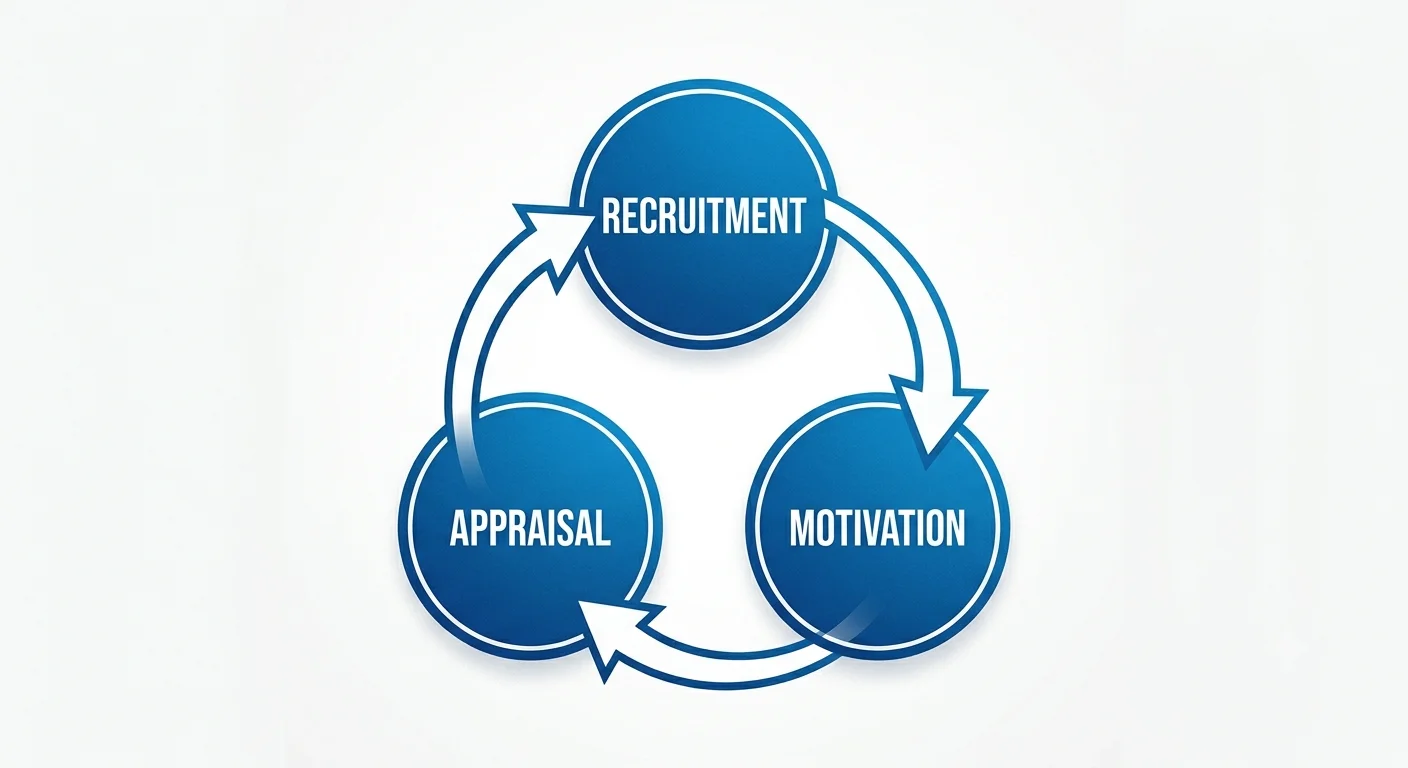
Well, you're not alone. Most students hit this exact wall because most textbooks and lecture notes explain these three ideas as separate chapters. When all these are together should be taught as one connected story. Here's the simple version. You hire someone, that's recruitment. You keep them engaged and pushing forward, that's motivation. Then you check in on how they're doing; that's an appraisal.
In this blog today, we'll see how each step feeds directly into the next one. So, let's begin.
Recruitment: Getting the Right Person In
Recruitment starts with a thorough job analysis. It's about figuring out what that particular position needs day to day, the tasks, the pace and the skills involved. From there, HR writes a person specification, basically a wish list of qualities the ideal candidate should bring.
Companies generally recruit in two ways. It's either Internally where the existing employee gets promoted. Or externally, by running ads or seeking candidates through various job portals.
Here's the part most students skip: bad recruitment ruins everything that comes after it. Hire someone whose skills don't match the role, and no amount of motivation or fair appraisal fixes that mismatch later. Raise this point early in your essay to show that you actually understand the cycle.
The Only Motivation Theories You Need to Know
Once someone is on board, it’s the motivation that keeps them going. When your assignment asks you about motivation theories, you don’t need to memorise 10 of them. Just the following four cover almost everything examiners are looking for.
Maslow's Hierarchy of Needs says people are motivated by whatever need is currently unmet, starting with basics like pay and safety, then moving up toward belonging, respect, and eventually self-fulfilment at work.
Herzberg's Two-Factor Theory categorises workplace motivation into two distinct factors. Hygiene factors like salary, conditions, and job security don't actually motivate anyone. It is the motivator factors like recognition, achievement, and growth that genuinely push performance up.
Vroom's Expectancy Theory posits that people expend effort only when it yields good performance. And that good performance eventually brings them the rewards that they want.
McGregor's Theory X and Y looks at management styles. Theory X assumes workers dislike work and need close control. Theory Y assumes workers are self-driven if they're given trust and ownership.
For coursework, Herzberg usually gives you the strongest link to appraisal. Since feedback fits neatly into his idea of a "motivator" rather than just a hygiene factor.
Performance Appraisal Methods and What They Actually Do
Performance appraisal is simply how a company checks whether someone is meeting expectations or not. Three methods show up constantly in this area of HRM coursework.
- Management by Objectives (MBO): This is where the employee and manager share the same goals and then review progress against them later. This is a good choice for accountability, though it takes time to run properly.
- 360-degree feedback: Here, the input comes from managers, peers, and sometimes clients instead of a single boss. This becomes useful when you need a fuller picture. However, it can get messy when the feedback conflicts.
- Graphic rating scales: simple numeric scoring against set criteria. Quick and easy to run, though it can feel rigid or a bit subjective.
None of these is automatically "the best" one. Your job in coursework is to judge which fits which situation and explain why.
Why 2026 Coursework Should Mention Continuous Feedback
The most relevant concern in 2026 is about mentioning “feedback”. Well, if you want your assignment to feel current rather than a textbook copy, you must add them. That’s because organisations in 2026 are shifting toward ongoing, real-time check-ins instead of one yearly sit-down. Around 72% of employees now say they'd rather get real-time feedback than wait months for a formal review meeting.
This updates the classic MBO and rating scale methods. Now they are being delivered more often and is always backed by better data. It also becomes helpful to spot patterns, flagging inconsistent ratings, and nudging managers to check in more often.
Where Appraisal and Motivation Actually Meet
This is the section that separates a pass from a strong grade, showing how appraisal actually drives or kills motivation.
- When the motivation is done well, appraisal feedback satisfies Herzberg's motivators. Employees feel recognised, they see a path forward, and they push harder.
- But if it’s done badly, it does the opposite. Vague criteria, once-a-year reviews, or feedback that feels like a personal attack can demotivate staff easily. Even if the appraisal process was technically "fair" on paper.
If you want to reflect this differentiator in your assignment, here's the strongest argument taken up from online HRM assignment help services. Build it around like this: appraisals' effect on motivation depends almost entirely on how it's delivered, not just whether it happens at all.
A Quick Case Study to Anchor Your Argument
Picture an Australian café chain hiring new baristas. Their recruitment policy says, “looking for a friendly personality. All other skills, like working fast under pressure or extra times, are omitted from the hiring brochure. What will happen? The new hires will struggle the moment they're put onto a busy shift.
This will lead to built-up frustration and turn the manager’s feedback into a critical one instead of constructive. Therefore, fixing the recruitment criteria upfront will make the appraisal conversations later far easier. Simply because expectations were realistic from day one.
A short, believable example like this is exactly what markers want to see: theory applied to a real workplace, not just repeated back at them.
When to Use Australian Employment Law?
If your case is Australian-based, bring in the Fair Work Act 2009. It requires that performance-based dismissals follow a fair process: clear expectations, a genuine chance to improve, and documented reasons along the way. When you link appraisal outcomes to this law, it will show your marker that you understand the legal side of HRM too and will eventually help you earn some extra marks.
How to Structure an HRM Essay Correctly
A strong structure looks something like this.
- Introduction: define recruitment, motivation, and appraisal, and state upfront that they form one connected cycle.
- Theory section: cover recruitment basics plus two or three motivation theories.
- Applied section: walk through appraisal methods using a real or fictional example.
- Critical evaluation: weigh up strengths and weaknesses honestly, don't just describe.
- Conclusion: tie all three concepts back together.
This structure alone solves most of what students actually struggle with when trying to write an HRM assignment using the recruitment, motivation and appraisal framework.
Quick Answers Worth Knowing
Recruitment and appraisal connect because recruitment sets the standard, and appraisal later checks whether that standard is actually being met. Fair hiring is what makes fair appraisal possible in the first place.
Herzberg's theory is usually the best fit for explaining appraisal's motivational effect, since recognition and achievement are what genuinely drive performance.
And yes, appraisal can at times demotivate people. Poorly delivered or unclear feedback often backfires, even if the process looks fine on paper.
Final Thought
Recruitment, motivation, and performance appraisal aren't three boxes to tick separately in your coursework. They're one story about how a company finds people, keeps them engaged, and measures how it helps the organisation.
Structure your essay around that connection, back it with one solid theory and one real example. And you’ll be automatically ahead of most submissions out there.
If you want a second pair of eyes on your structure or argument before you submit, the team at New Assignment Help Australia is happy to review it for you.

 9 Years | Postgraduate Diploma in HRM